12 Nov Carrowmore Passage Tomb Cemetery
“The incorporation of one’s ancestors into the landscape by the building of spectacular, eternal monuments made a physical change to the landscape of the living. By this intrusion of ‘construed eternity’ into the eternal landscape, man left deliberate marks after himself…. Thus the landscape becomes a malleable instrument which can be transformed, and where certain features can be used and enhanced with an ambition to influence people.”
Stefan Bergh, 1995 1
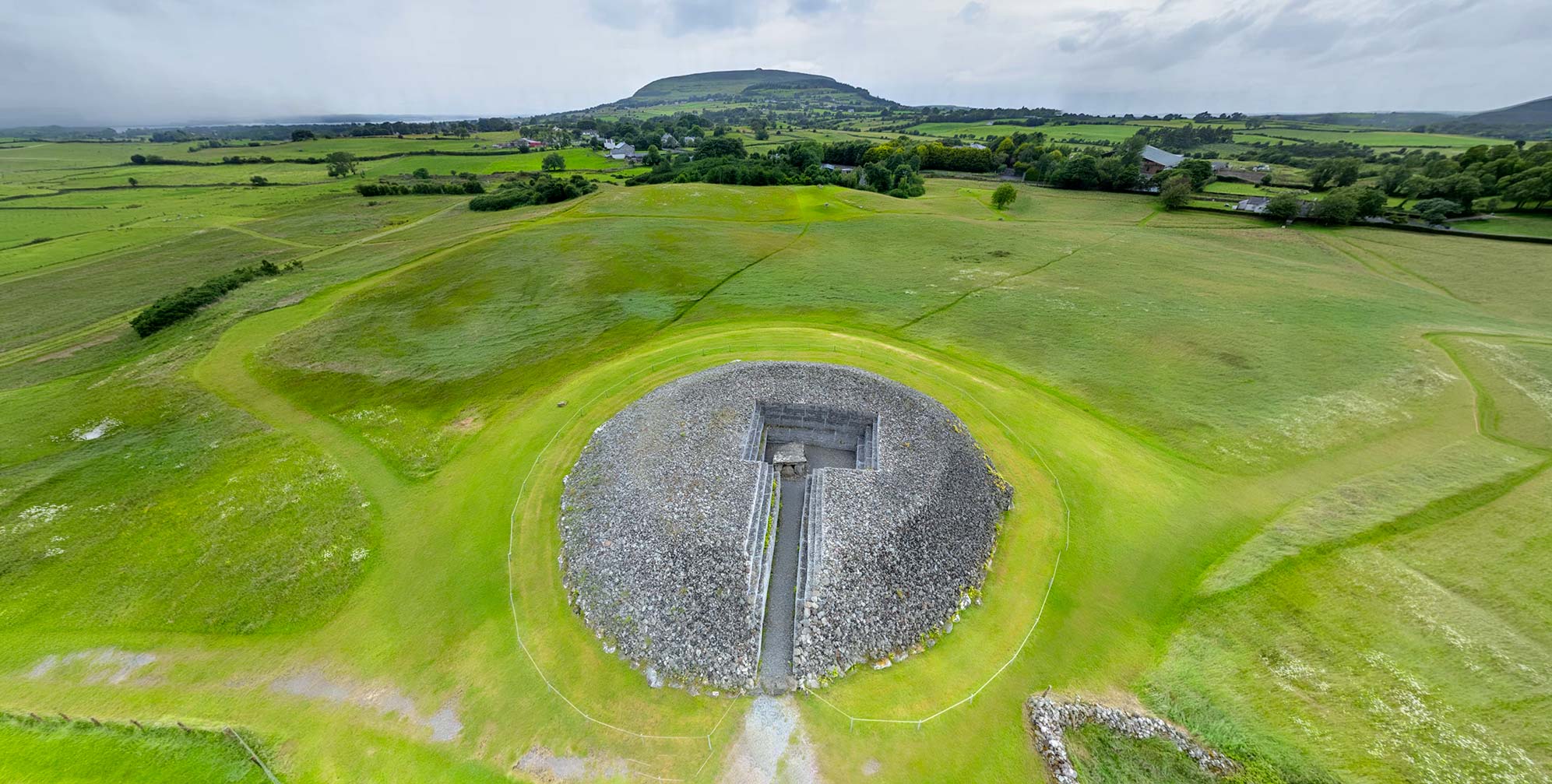
Click the image above to enter the virtual-reality tour.
Beyond its detailed exploration of the central monument (Listoghil), the VR tour provides links to 27 satellite tombs. It is thought that there were some 40 tombs within this expansive megalithic cemetery prior to modern depredations.
On a fine day at Carrowmore, the light throws itself against Ben Bulben’s limestone face, and then spills onto the Cúil Iorra peninsula—an undulating green landscape lined, improbably, with circles of ancient stone. The light does not just rake across stone and heather; it seems to move through time, teasing together the lives of Neolithic farmers, medieval storytellers, nineteenth‑century antiquaries, and modern archaeologists who have all tried, in their own ways, to make sense of this crowded field of megaliths near Sligo.
In Neolithic Ireland, Cúil Iorra was not a backwater but a ritual heartland, one of four great passage-tomb regions alongside Brú na Bóinne, Loughcrew, Carrowkeel, and Keashcorran. Pollen and landscape studies show woodland clearances beginning just after 3750 BC, evidence of early farming communities reshaping the peninsula’s dense deciduous forests.2
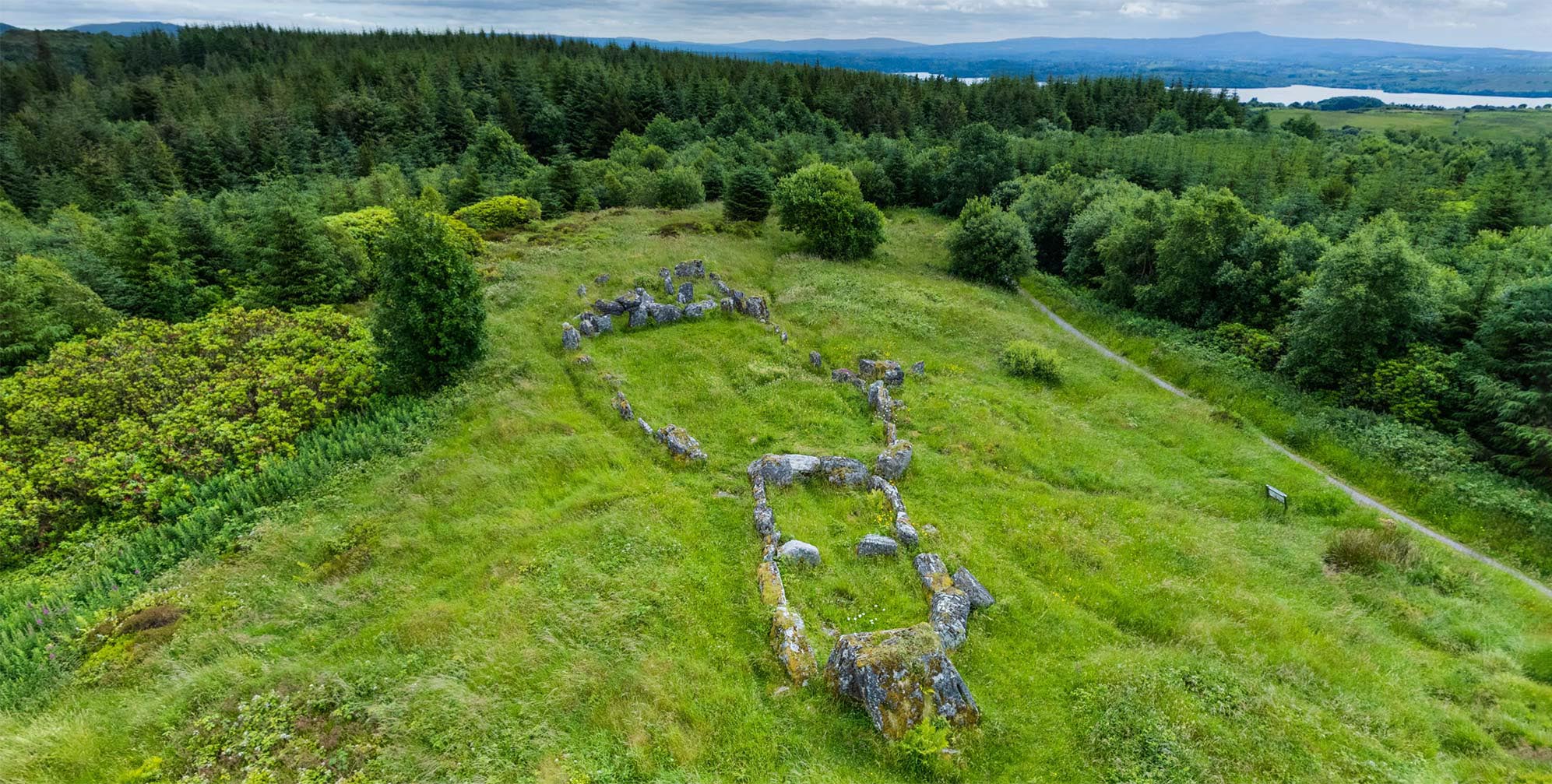
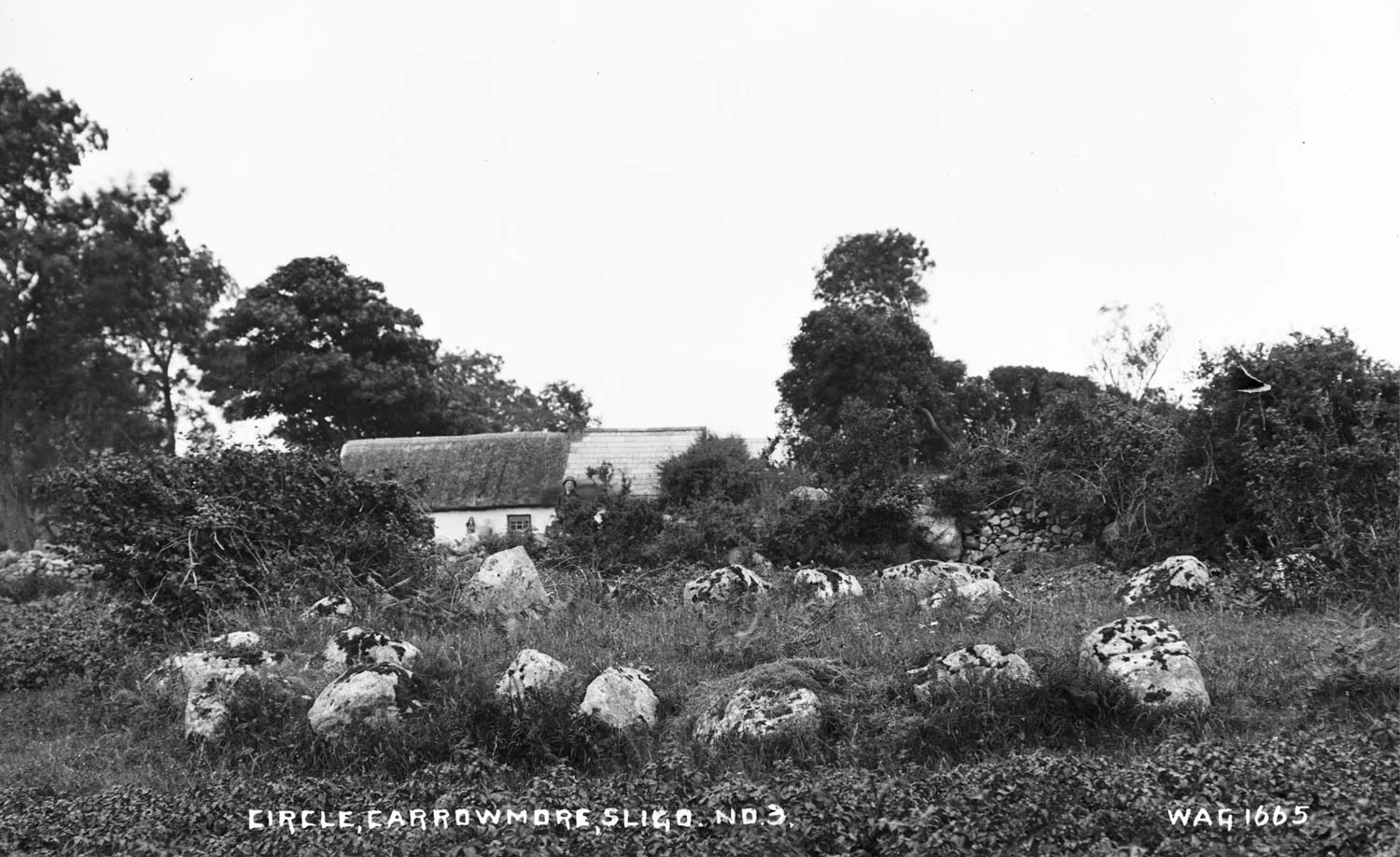
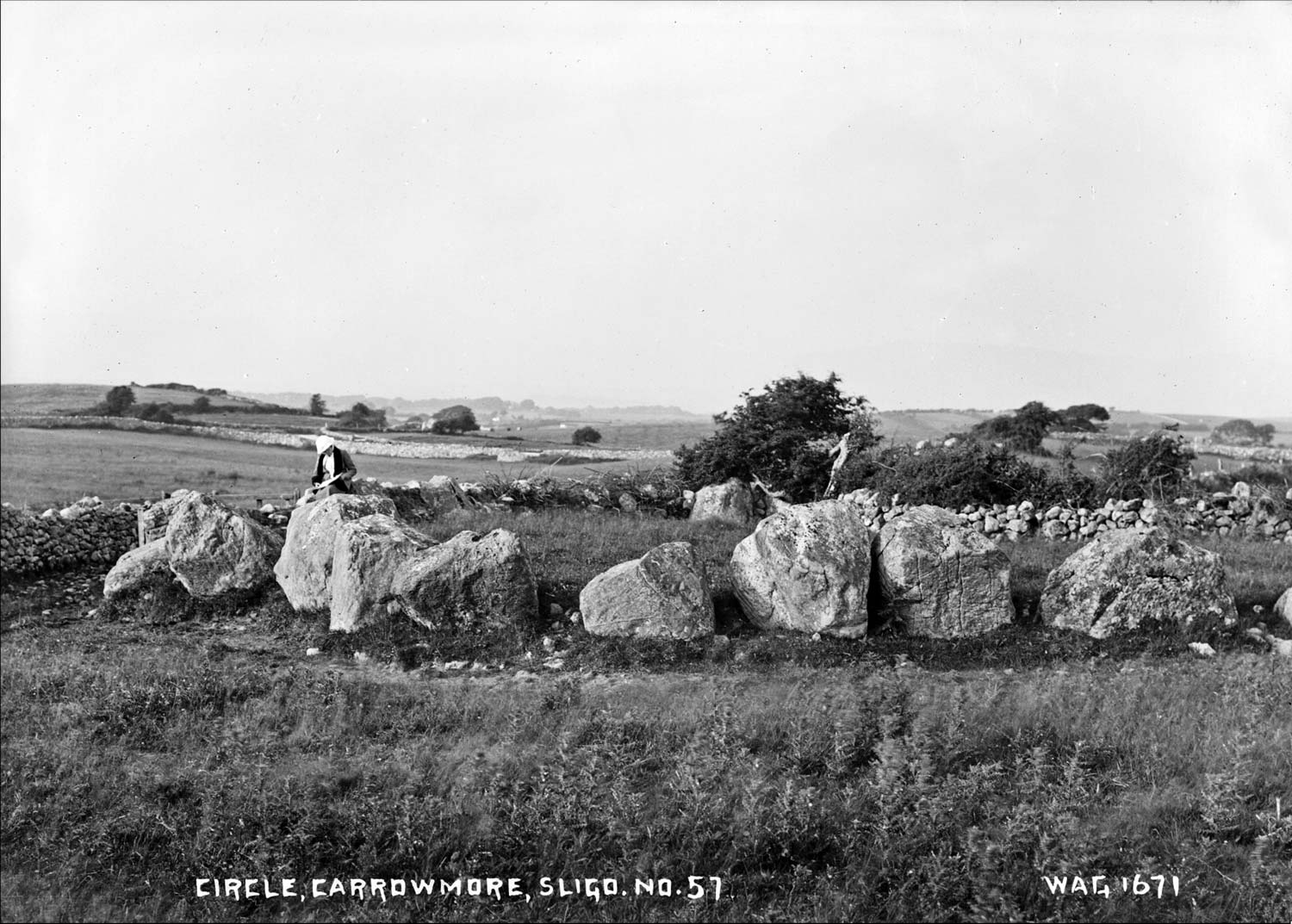
The place itself resists easy classification. Unlike the great cairn‑capped hills of Brú na Bóinne or Loughcrew, Carrowmore’s tombs sit low, embedded in ground that in prehistory was a mosaic of woodland and clearings. Around forty passage tombs once ringed a central monument, Listoghil (Carrowmore 51), forming an oval chain of stone circles roughly a kilometer (0.6 mile) long. Most are modest circles of shoulder‑to‑shoulder boulders enclosing small, pentagonal chambers that were probably never hidden under mounds.
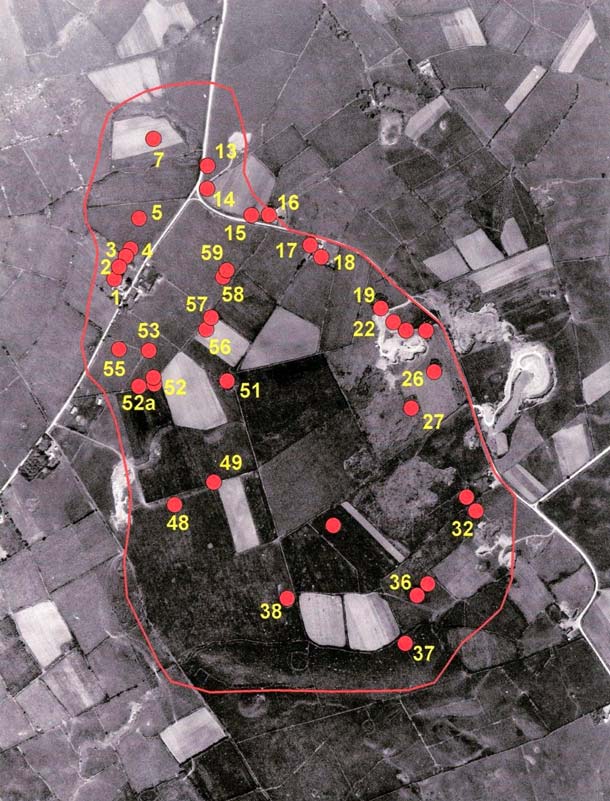
The ensemble feels less like a set of towering statements and more like a dense, walkable necropolis: a place you move through, rather than simply look at from afar.
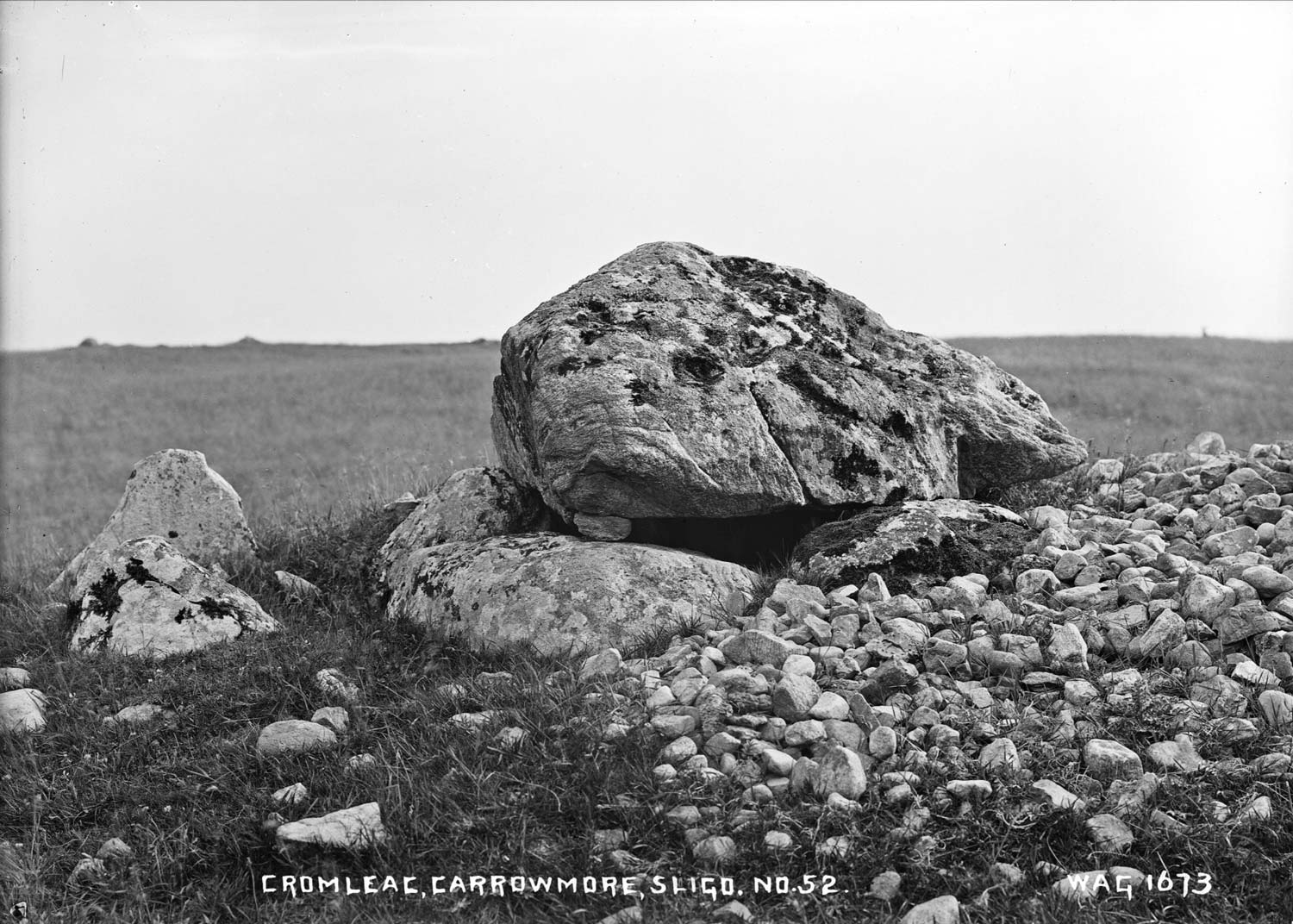
Archaeologists class them as passage tombs, ancestors of Newgrange, Knowth, and Dowth. But at Carrowmore the architecture is more stripped down: circular settings of earthen platforms (tertres) topped with boulders forming a small central burial chamber open to the light, rather than long roofed passages tunnelling into massive mounds. Excavation has shown that this cemetery was in primary use from roughly 3775–3520 to about 3300–2950 BCE, making it among the earliest known passage‑tomb landscapes in Ireland.3
The modern archaeological understanding of Carrowmore was born in the nineteenth century, in the midst of a dispute over what megaliths meant. Before radiocarbon, before pollen diagrams, antiquaries leaned on Scripture, Classical texts, and speculative linguistics; cairns and cromlechs were variously assigned to Druids, Vikings, Danes, or biblical patriarchs.
Sir James Ware, for example, believed the stones of Carrowmore to belong to the Danes (Vikings). He wrote in 1705:
“Of this ancient work, many are the Opinions, but there being, as I hear, in those chambers no passage either for light or smoke, it seems not probable that they should be habitations of the Danes, but rather Barns or Store-houses, or (which I rather think) sepulchers of their Princes.” 4
Ware correctly deduced that they were related to burial practices.
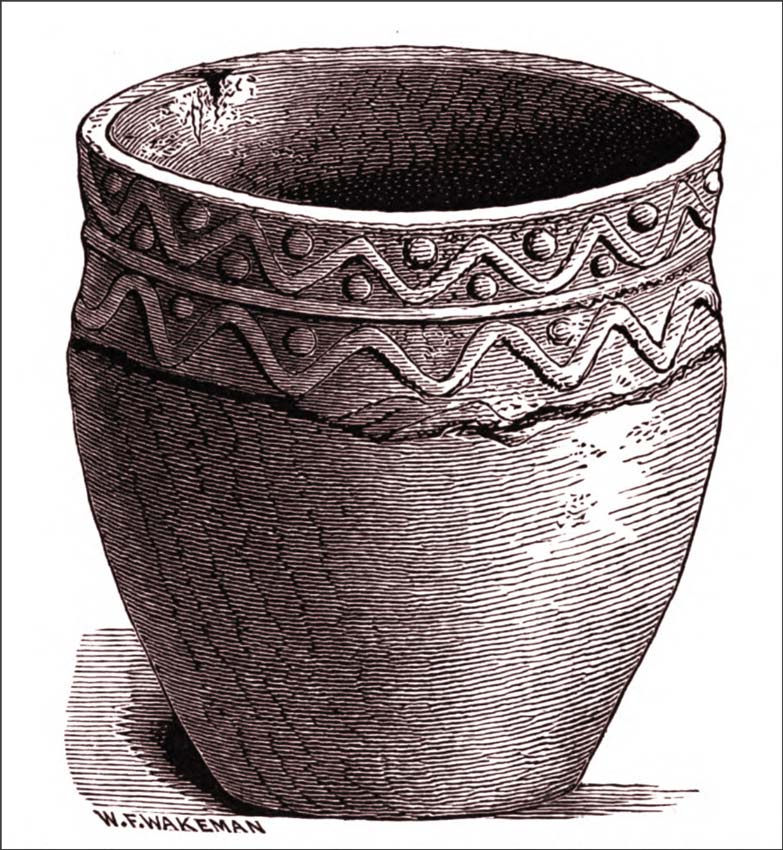
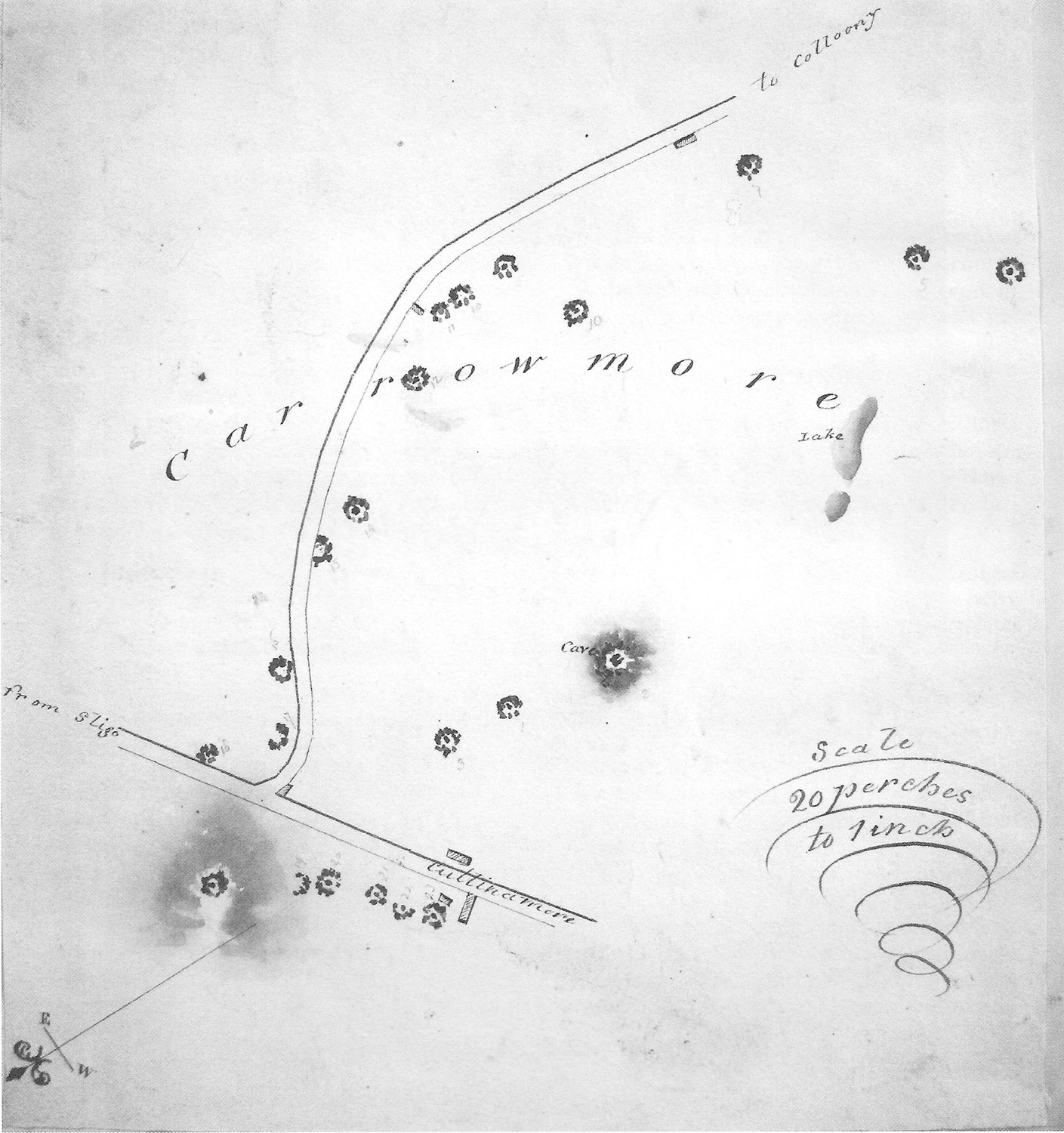
It was against this backdrop when George Petrie arrived in August 1837, took one look at the ring of “Druidical circles” on the map, and spent two weeks measuring, sketching, and interviewing farmers about the bones and urns they turned up when they robbed stones from the tombs to use in their fieldwalls. Petrie wrote:
“But the destruction going on daily is horrible and if I did not work now, it would be too late to preserve a memorial of them in a short time. The peasantry generally have no reluctance to destroy them – on the contrary, are glad to get permission to clear the land of them.” 5
With help from his Sligo ally Roger Walker, Petrie documented at least 63 monuments (not all of them passage tombs) and collated reports of human remains and pottery from more than twenty of them.
He concluded, emphatically, that the cromlechs and circles at Carrowmore were “sepulchers”—not temples—and that the sheer number of bone‑filled chambers made a persuasive argument against the nonsensical romantic visions of solitary sacrificial altars. He drew support from local folklore, noting that the stones were known not as sanctuaries but as Leaba na bhFian (“beds of the warriors”) and Leaba na Fear Mór (“graves of the giants”), names that dovetailed neatly with the folk tradition of Carrowmore as burial place of Fir Bolg warriors after the First Battle of Moytura.6
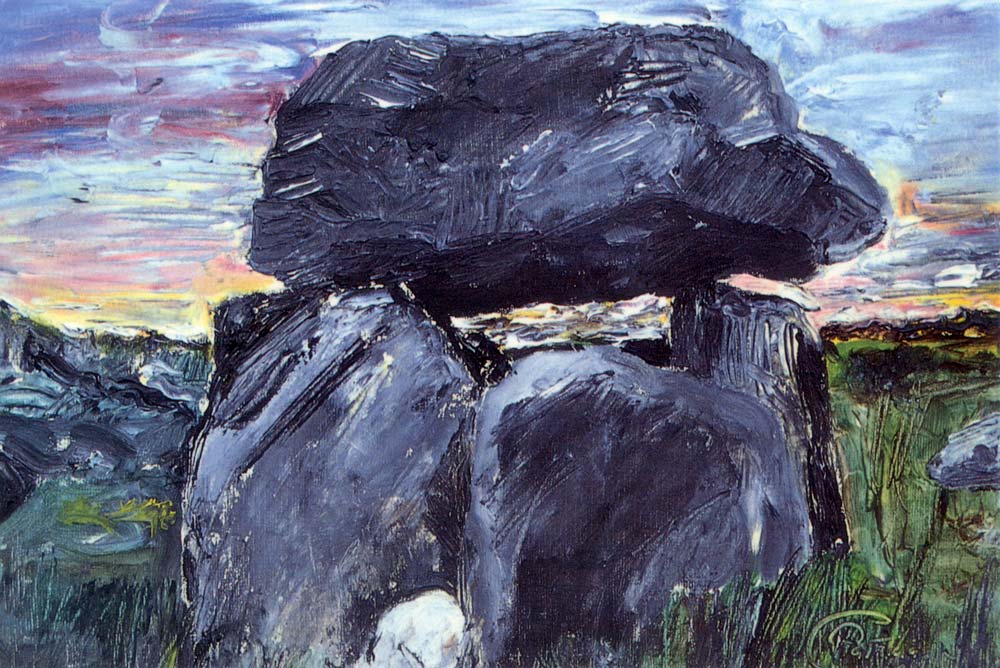
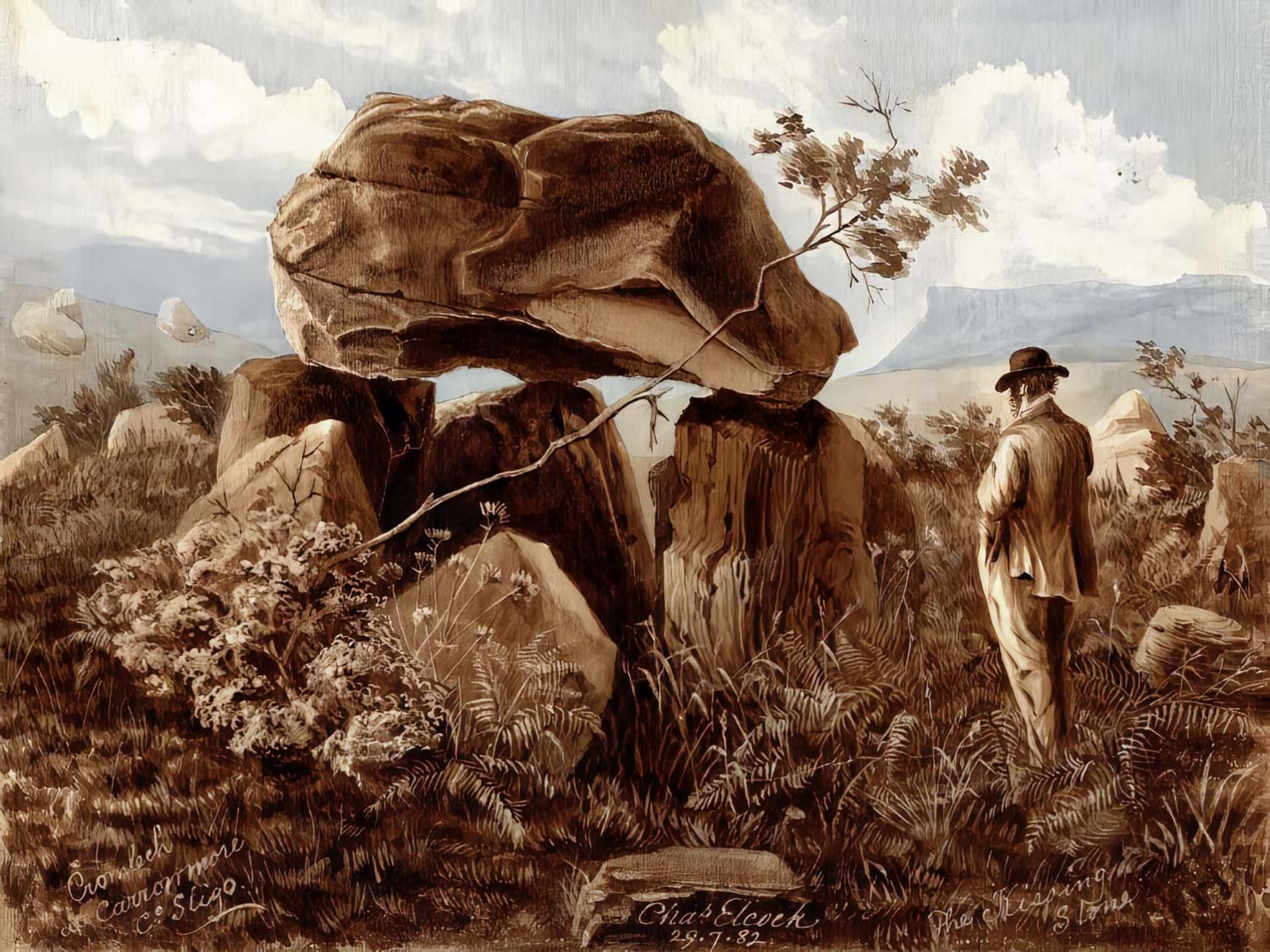
“It is the site of the last and desperate battle fought by the Firbolgs, about the year 30 B.C., just before they fled to Aranmor, where several of their stone cahirs still remain. At Carrowmore they made their last stand on the mainland of Ireland.” 7 Charles Elcock, 1885.
The one thing Petrie does not doubt is that folklore matters. He quotes the local names for the stones, Leaba na bhFian and Leaba na Fear Mór, as seriously as he does any Classical source. He notes that the monuments are associated in tradition with the First Battle of Moytura, in which the Fir Bolg are defeated by the Tuatha Dé Danann and fall back toward this peninsula. He is not naïve; he knows that stories change in the retelling. But he prefers the imaginative errors of a living tradition to the exotic certainties of eighteenth‑century armchair scholars. Petrie’s move from textual speculation to empirically grounded argument—bones and urns in the ground outweighing Druids in the imagination—is often credited as a cornerstone in the birth of Irish archaeology.
Yet even his “modern” interpretation remained entangled with myth and a biblically constrained sense of time. He saw the Carrowmore dead as historically real Fir Bolg or Belgae, immigrants from the eastern Mediterranean described in medieval sources, and the great central cairn at Listoghil as the tomb of their most distinguished leader. The site was both data and legend, a platform from which to argue that medieval pseudo‑histories encoded real migrations.
Local folklore would contribute its own echoes of the battles in which the Carrowmore dead fought. W. G. Wood-Martin (1888) recounted such a story:
“A peasant of the neighbourhood stated that in his youth old people used to recount how, on certain nights in the year, lights were to be seen in this ‘ould fort,’ and noises heard, as if contending armies were engaged in fray!” 8
A century and a half after Petrie, Swedish archaeologist Göran Burenhult (see video below) returned to Carrowmore with a new ambition: to place the cemetery firmly in time. Excavations between 1977 and 1982, and again in the 1990s, produced dozens of radiocarbon dates, mostly from charcoal, and seemed at first to push the origins of the Carrowmore monuments deep into the fifth millennium BCE—perhaps even into the Late Mesolithic, before farming had taken hold in Ireland. For a moment, Carrowmore appeared to be not just Ireland’s earliest passage‑tomb complex, but one of the earliest megalithic landscapes in all of Europe, built, it was claimed, by hunter‑gatherers. In our VR tour (above) there are three views of the Burenhult excavation of Listoghil.9
This short video was made in 1998 during Swedish archaeologist Göran Burenhult’s excavation of Listoghil.
Burenhult’s claim was spectacular, and problematic. The monuments themselves yielded no Mesolithic tools, no unequivocally early Neolithic artefacts to match the very old charcoal dates. Skeptical archaeologists pointed to the “old wood” problem—charcoal from long‑lived trees or earlier fires incorporated into later deposits—and to the difficulty of tying loose pieces of charcoal to specific construction or burial events.
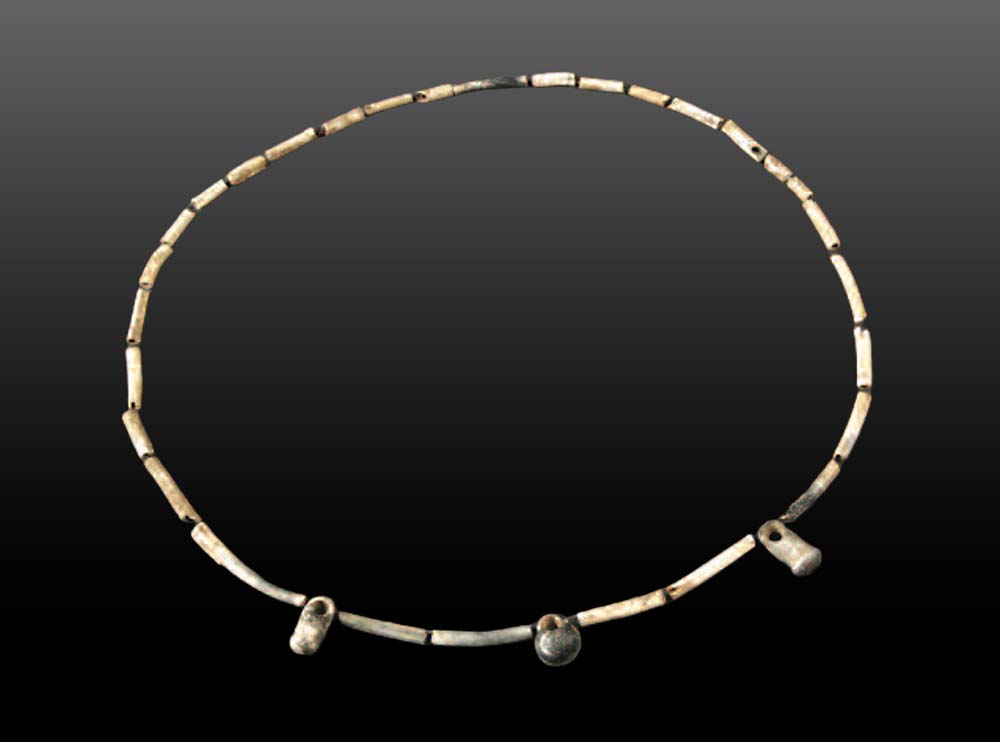
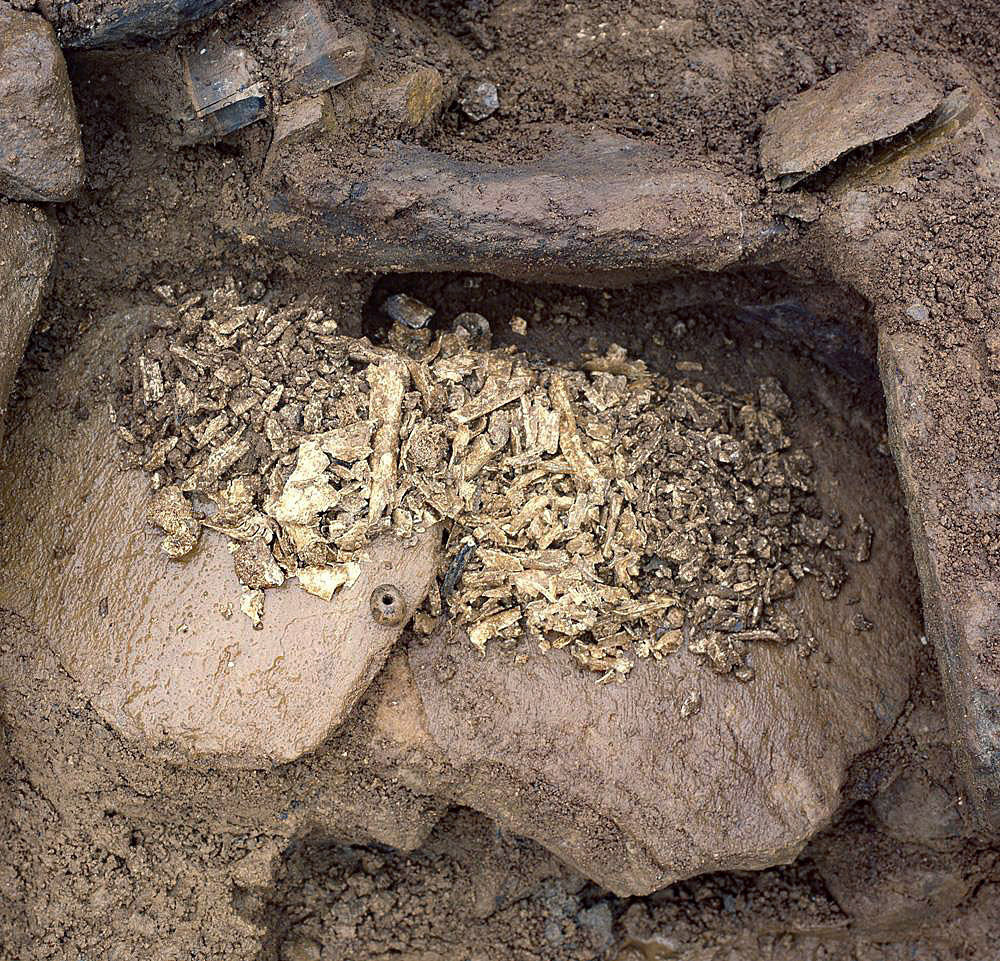
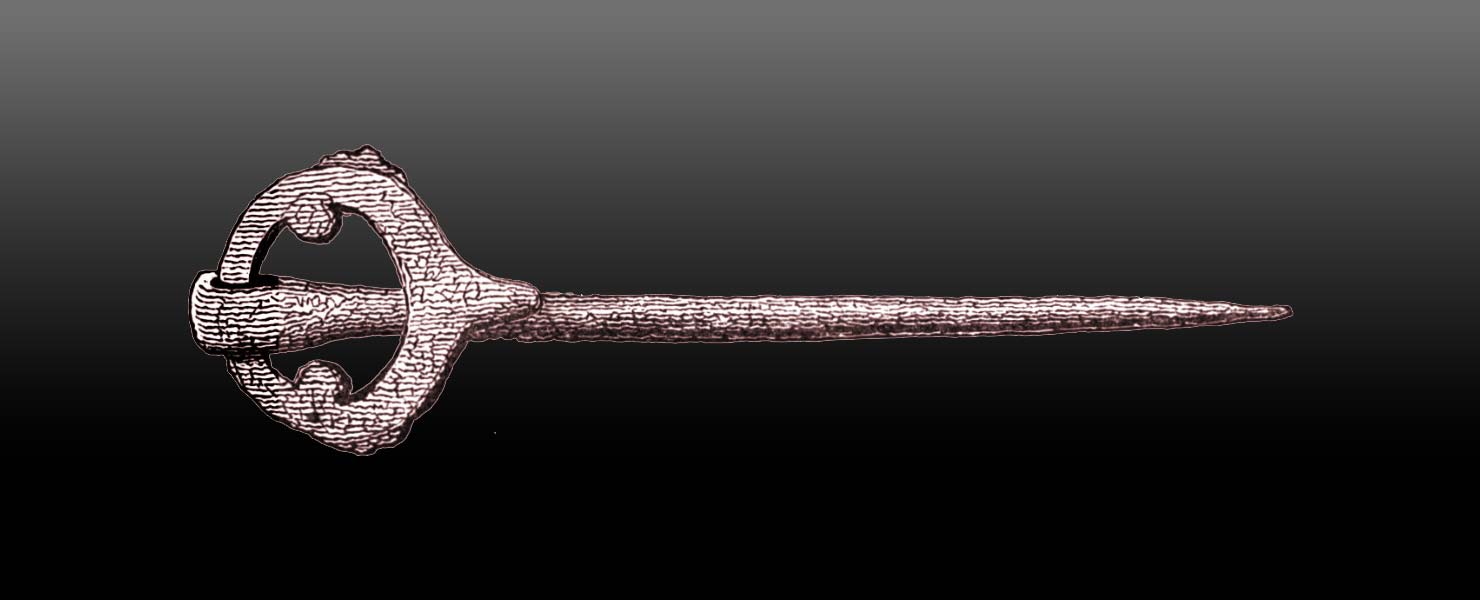
In response, archaeologists Stefan Bergh and Robert Hensey designed a different kind of dating project. Instead of charcoal, they focused on small, burnt pins of bone and antler that turn up again and again in passage‑tomb burials. These pins were probably used to fasten the clothing of the dead on the funeral pyre and then ended up in the burial layers alongside burnt human bone. Because they were used on the body at the moment of cremation, they are tightly linked to the actual burial event.10
The pins themselves are humble objects. In photographs from the National Museum of Ireland, they look like a jumble of broken pencil‑sized sticks—creamy bone turned grey and black, with cracked surfaces from intense heat. Many are only fragments; originally, most would have been about 10–15 cm (4–6 inches) long. Many were dug up in the nineteenth century by Wood‑Martin, who excavated twenty‑two Carrowmore chambers in 1887 and measured his finds by the bucketful. He noted cremated bone, beads, and bits of quartz, but the pins, stripped of their heads and tips, went largely unremarked into bags and drawers. One, he recorded, was an impressive 36 cm (14 inches) long.
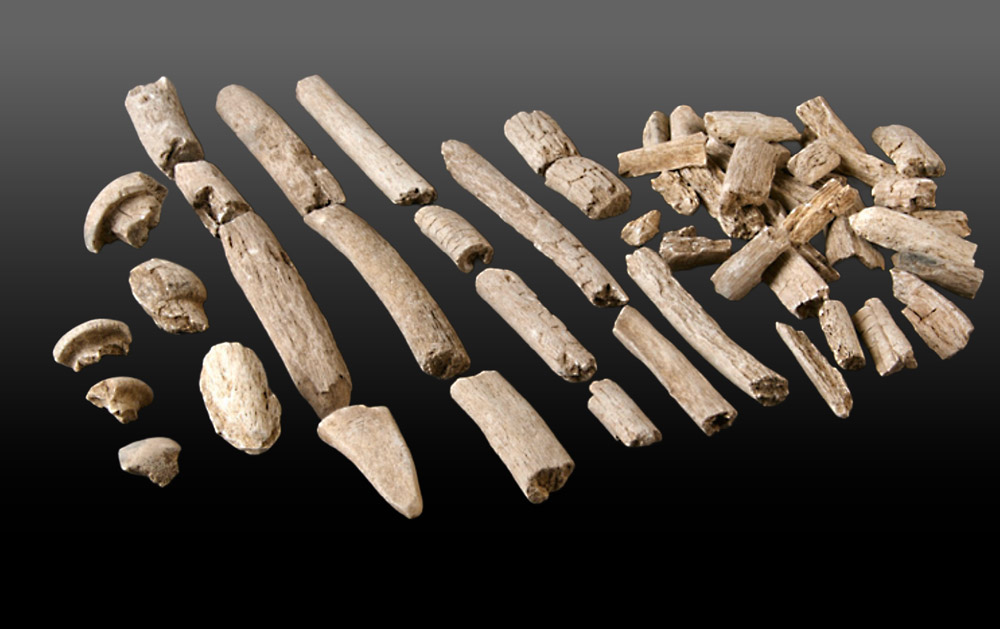
It took another century before anyone realized how valuable these pins were for dating.
Charcoal-derived dates, as most now agree, are problematic: trees can be centuries old when they burn, and charred wood can move from context to context. Pins, on the other hand, are intimate. They sit on the body during cremation, then travel with the bones into the tomb. If you want to know when a monument was actually being used for burials, they’re the best indicators.
The results were decisive. All of the dated pins fall between about 3785 and 2995 BCE at 95% probability, which, combined with chronological information provided by the archaeological evidence, indicates an overall span of use for these tombs from 3775–3520 to 3305–2950 BCE. When those findings are combined with a critical re‑reading of the older charcoal dates—keeping only samples securely tied to construction horizons or sealed contexts—a coherent picture emerges. Carrowmore’s passage tombs are early, but not Mesolithic: they belong firmly to the early and middle centuries of the Irish Neolithic, contemporary with the first evidence for woodland clearance and farming in the lakes and bogs around Cúil Irra.11
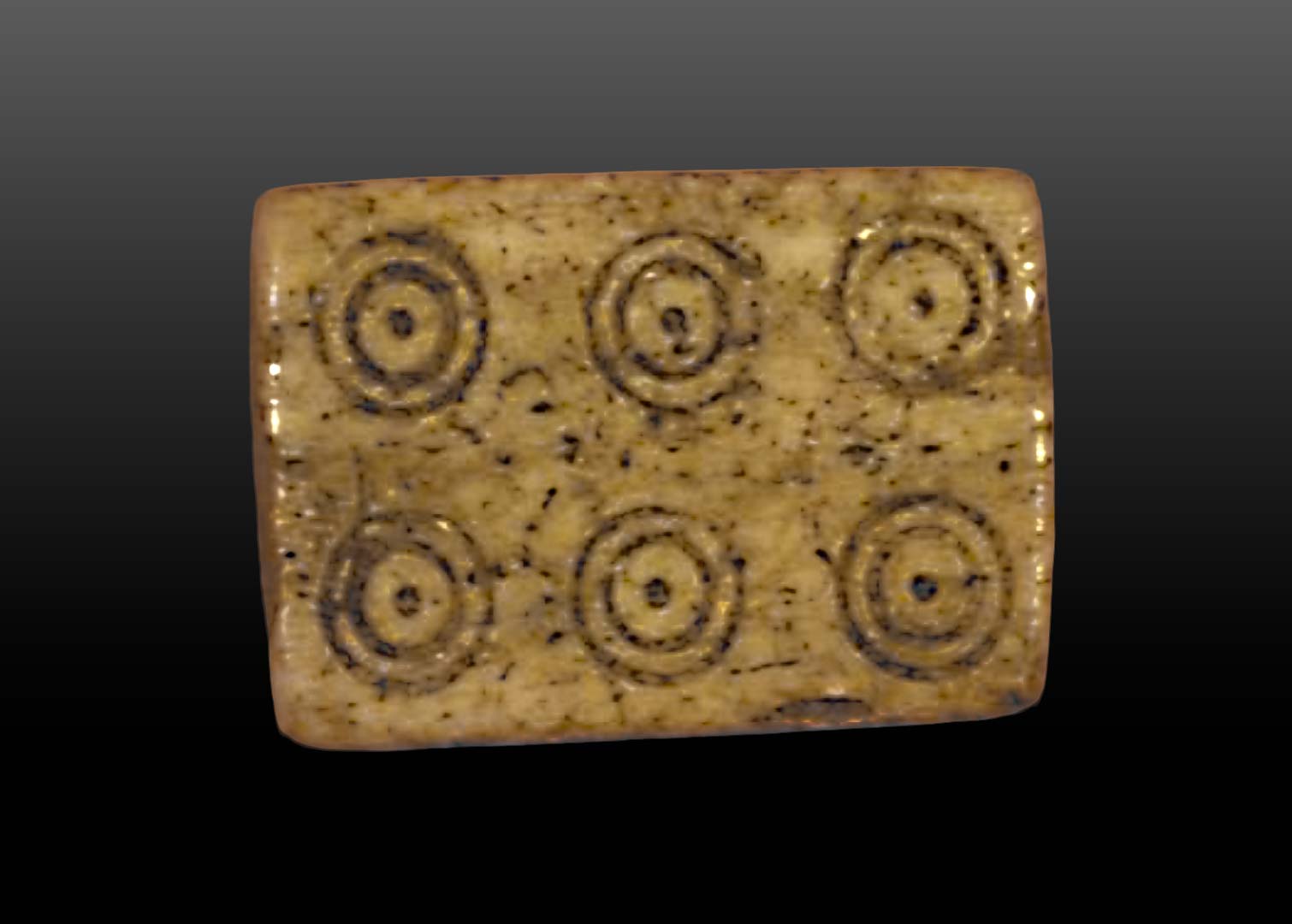
Carrowmore is the central node in a wider ritual topography that took shape in northwest Sligo between about 4000 and 2500 BCE. High above Carrowmore, the great cairn of Meascán Mhéabha crowns Knocknarea’s flat summit, widely believed in tradition to be the grave of Queen Maeve, the formidable sovereign of Connacht. Many of the Carrowmore tombs have visual lines to this cairn, creating a ritual dialogue between lowland circles and mountain-top mound. Medb’s (Queen Maeve) presence in the landscape signals power, sovereignty, and cyclical renewal: the idea that rightful kingship depends on union with the land itself, personified as a goddess or queen. In this mythic framework Medb and the anonymous builders of Carrowmore participate in the same drama: ensuring fertility and continuity through rites of death, memory, and geographic alignment.
To the east, the twin cairns of Carns Hill punctuate the skyline, while smaller passage tombs dot the Ox Mountains and even form a traffic roundabout in Sligo town. In the earliest Neolithic, a causewayed enclosure at Magheraboy—its segmented ditches filled with keel-shaped bowls, leaf‑shaped arrowheads, chert-formed axes, and quartz—drew communities together for feasting and ritual deposition, probably from as early as 4000 BCE.12
For all their outward simplicity, the Carrowmore tombs contain complex histories of burning and careful deposition. The excavations by W.G. Wood‑Martin in the 1880s, and much later by the Swedish campaigns, found chambers filled with cremated human bone—32 kilograms from Carrowmore 3 alone, probably representing more than fifty individuals. As for who were these individuals, Stefan Bergh said:
“Not everybody would have been buried in these tombs; probably only a few were selected. We simply do not know how people were selected. It could have been the seventh son or everybody with red hair and a limp.” 13
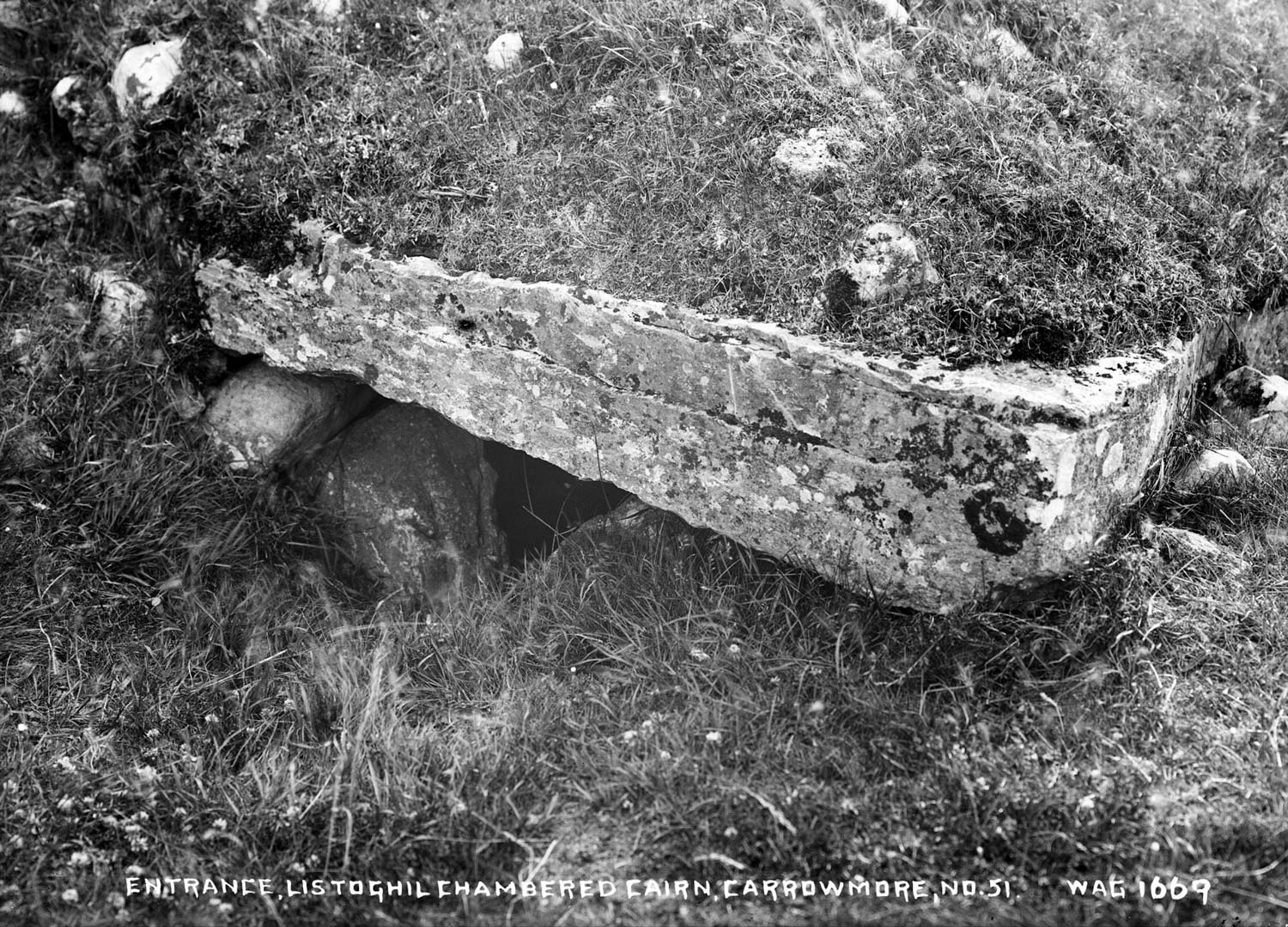
At the hub of the cemetery stands Listoghil, a monument that has always made scholars uneasy because it refuses to be entirely typical. Its stone circle is by far the largest at Carrowmore, some 32 meters (105 ft.)across, enclosing a rectangular chamber built of hefty slabs and capped not by a split boulder, as many smaller tombs are, but by a massive, flat limestone roof‑stone. Excavation showed that this chamber was initially free‑standing and accessible, with large fires burning around but not within the tomb—a time when the monument served the living as much as the dead. Only later, with the addition of the cairn, was the chamber entombed, sealed and rendered invisible, its role shifting toward a morer symbolic ancestor realm.
Listoghil is featured in detail within our VR tour above, in which several of the VR nodes (locations) were photographed during the late 1990s excavation of the tomb. The megalithic art discovered on the top stone may also be noted.
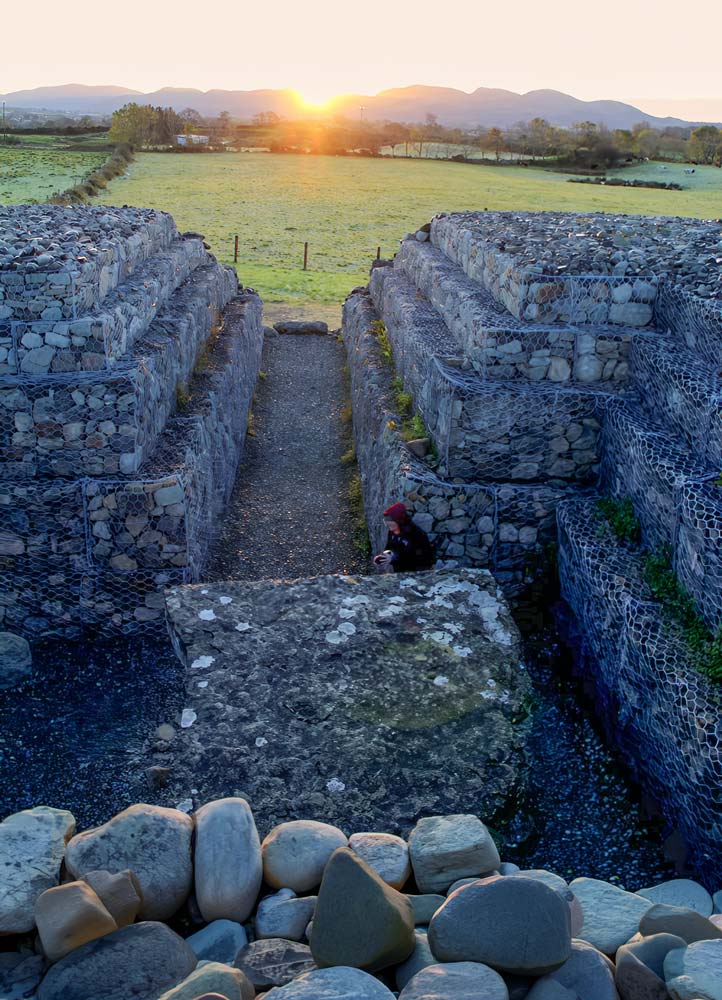
The modern reconstructions at Listoghil are entirely conjectural—there is no evidence that the cairn ever stood any higher than the capstone of the chamber. The stones of the present-day cairn were taken from nearby fieldwalls, which themselves were likely constructed from stones robbed from the Carrowmore monuments. The modern visitor entrance to the interior of the monument was created from one of Burenhult’s excavation trenches.
Listoghil’s burial practices differ slightly from the cremation‑only pattern seen in many other Carrowmore tombs. While burnt remains and typical passage‑tomb artefacts occur, archaeologists also found unburnt (inhumed) bones associated with the chamber, suggesting that the community experimented with a broader range of burial rites.
For a time, Burenhult argued that Listoghil was a late, intruding addition to an otherwise early and uniform cemetery. When his charcoal dates were re‑evaluated and combined with the results from the bone pins, however, a different picture emerged. Secure samples suggest that Listoghil’s chamber was built in the century before 3500 BCE, with its cairn added shortly afterward—only perhaps 150 years later than the earliest dated use of other Carrowmore tombs. Rather than an outsider, Listoghil now looks like a central monument in an evolving complex—its more elaborate architecture a local response to changing ideas about display, concealment, and the proper distance between living communities and their dead.14
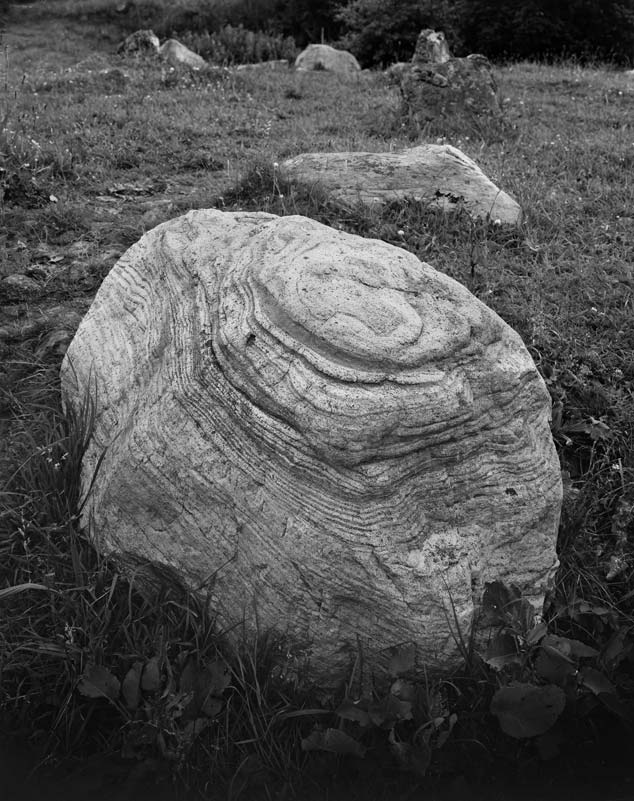
For decades, Carrowmore seemed almost devoid of the elaborate megalithic art that enlivens the stones of Newgrange and Knowth. Then, in 1993, a photograph of Listoghil’s capstone taken under slanting light revealed faint arcs on its south‑eastern edge. Subsequent recording using vector drawing from digital photographs with oblique lighting clarified those arcs as a motif of four nested, penannular circles directly over the probable entrance gap between two orthostats, and, just above, a previously unnoticed chevron of seven angles. Local artist Patricia Curren-Mulligan is credited with the discovery of the megalithic art. Both forms fit neatly into the grammar of Irish passage‑tomb art: nested arcs and chevrons are common on roof‑stones and lintels that mark thresholds between spaces, particularly over entrances to chambers and subsidiary cells. This megalithic art may be noted in the VR tour, above.
Inside Listoghil, the picture is murkier. A “three‑armed” pick‑pecked motif on the inner face of the front gable‑stone (orthostat B), first traced in the 1990s, looks less and less Neolithic the more closely it is examined. Its tiny, regular pick‑marks suggest a metal tool rather than stone; its form has better analogies in Iron Age or later motifs such as those at Cloverhill than in passage‑tomb art; and it sits amid a field of fresh‑looking dressing marks. At Carrowmore, as elsewhere, the stones served as a permanent guestbook, inviting a signature: later visitors could not resist adding their own signs to an already crowded symbolic environment.
Taken together, these discoveries undermine any lingering notion that sophisticated megalithic art was a phenomenon solely from the east of Ireland. They also hint that the emergence of the passage‑tomb style involved a far‑flung conversation across the island, with Cúil Irra participating from an early stage.
The peninsula’s stories repeatedly circle around themes that archaeologists, reading bones and cut‑over peat, also recognize: the arrival of new ways of living; cycles of destruction and renewal; the tying of elite death to the fertility of land and stock.
Subsequent discoveries elsewhere—most dramatically the opening of the Knockmary tumulus in the Phoenix Park in 1838—would overshadow Carrowmore in the argument about “Druids’ altars.” But Petrie’s fieldwork, amplified and sometimes corrected by Walker’s excavations, remained foundational. The Ordnance Survey six‑inch map, published in 1838 with the Carrowmore monuments carefully plotted, put this Sligo field of stones literally on the map of scholarship.
The modern pin‑based chronology has finally severed Carrowmore from the Late Mesolithic and from hunter‑gatherer builders, but it has not stripped the site of mystery. If anything, aligning the tombs’ main use between about 3700 and 3200 BCE has made them sit more snugly within a web of myth that, though recorded much later, is hard to dismiss as mere medieval fancy.
In the narrative of the First Battle of Moytura, the Fir Bolg retreat into Cúil Irra and are defeated near Ballisodare; the Carrowmore tombs mark the graves of their fallen heroes, while Medb’s cairn on Knocknarea looms above as a monument to later cycles of conquest and sovereignty. Below the mythic surface, archaeologists find causewayed enclosures, early clearances, and a long‑lived cemetery that was used for centuries by farming communities who burned their dead, curated their bones, and walked repeatedly between sea, plain, and mountain.
Carrowmore today is quiet. Visitor paths thread through truncated circles; Listoghil’s reconstructed cairn sits white‑grey against the grass, its capstone still catching the evening light. To write about it now is to hold several chronologies in mind at once: the calibrated spreads of radiocarbon dates; the long arc from Petrie’s notebooks to carbon dating, and the deeper, less measurable time of stories in which a goddess spills stones across a peninsula and a queen’s cairn continues to watch, from the west, over the graves of warriors whose names only myth remembers.
Excerpted below is one stanza from Larry Stapleton’s poem “Carrowmore.”
“…and perhaps like that, still,
if we listen, from Listoghil,
or somewhere in the ring of hills,
we may one day pick up an echo,
come to hear a silence sing.” 15
Carrowmore Gallery
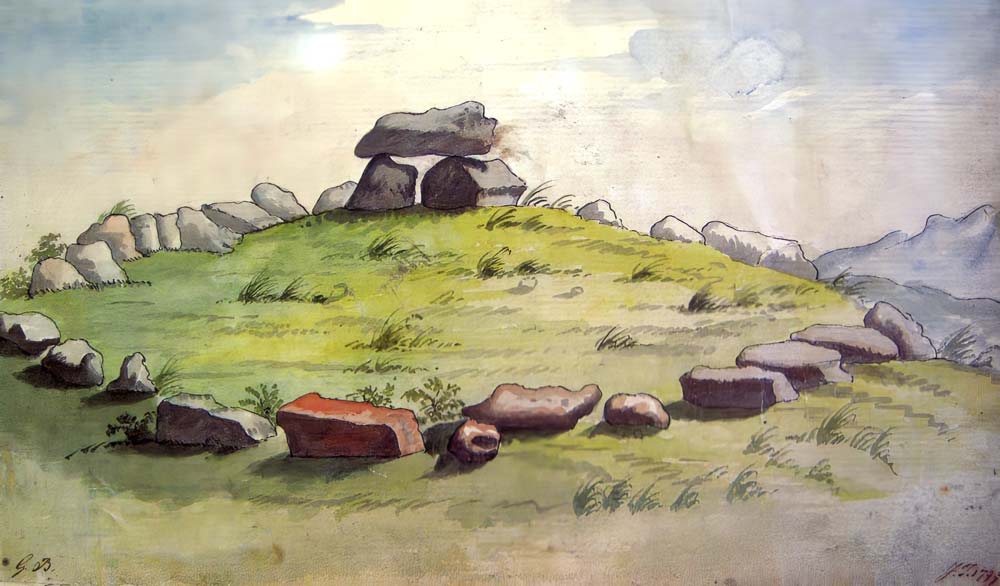
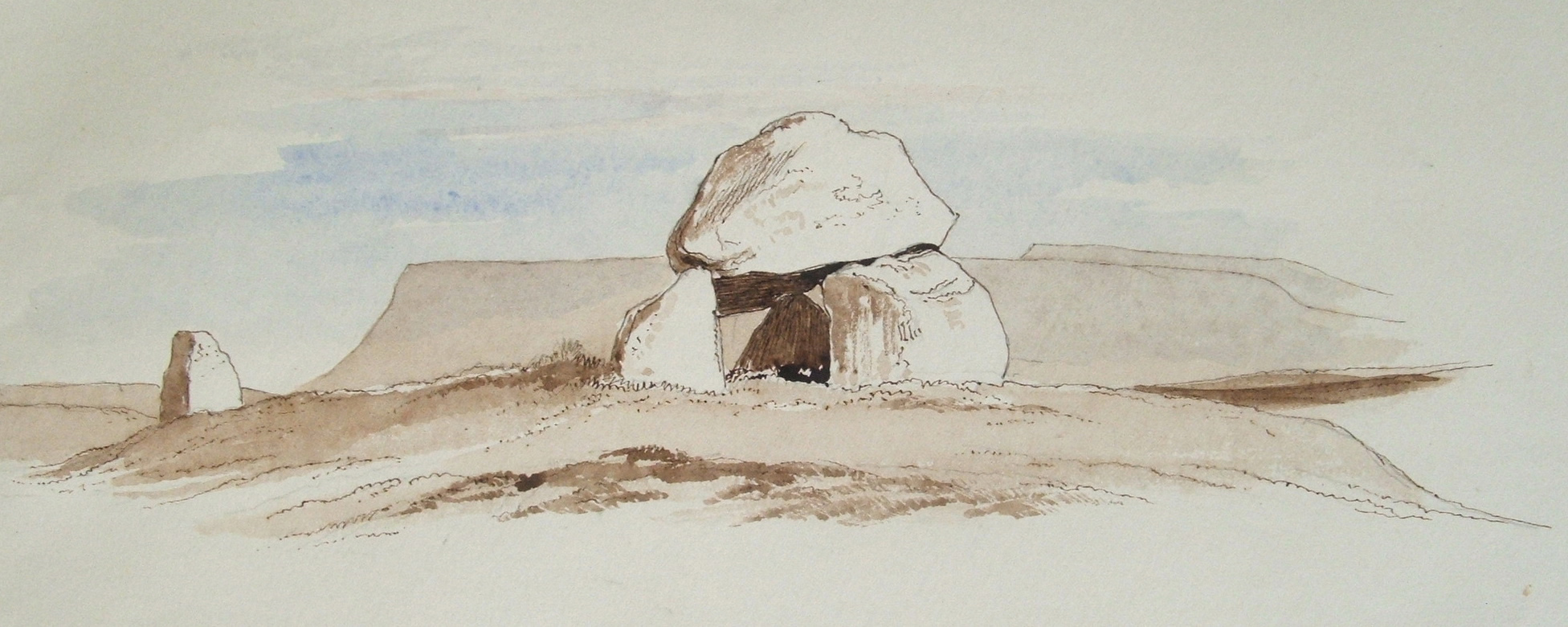
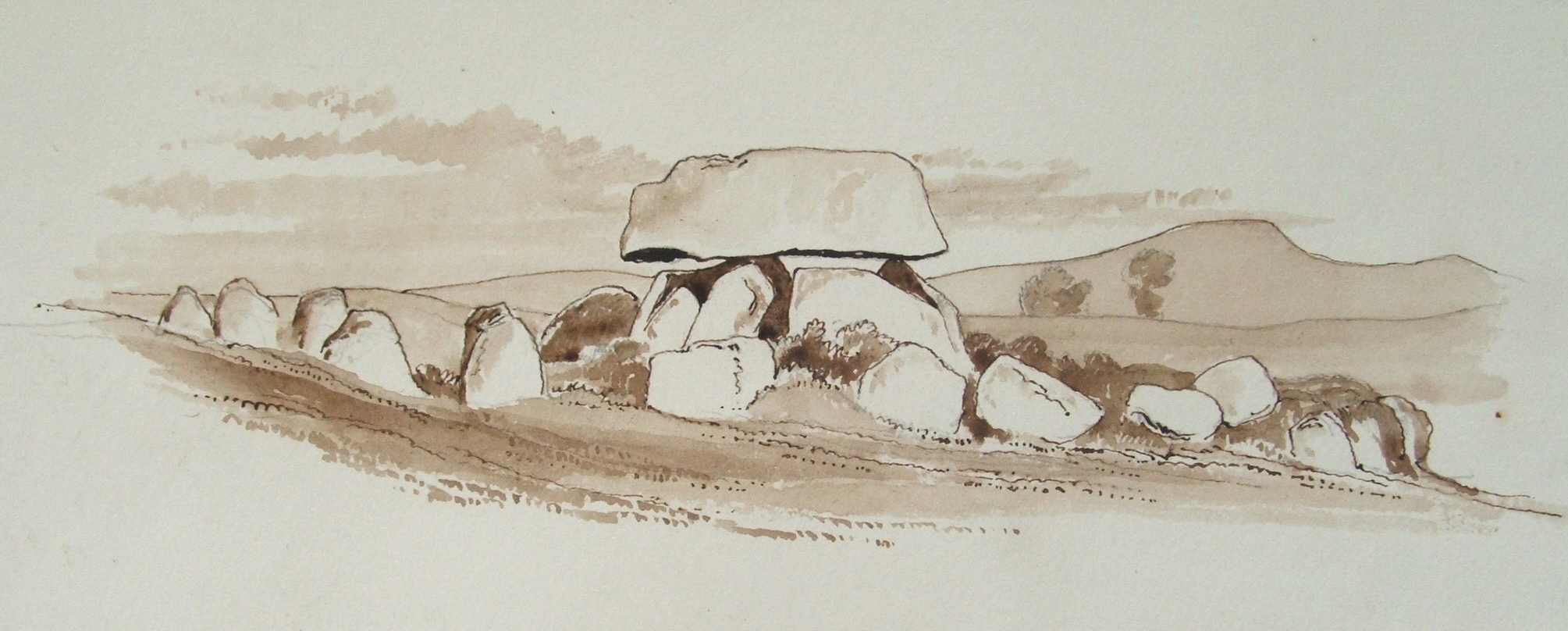
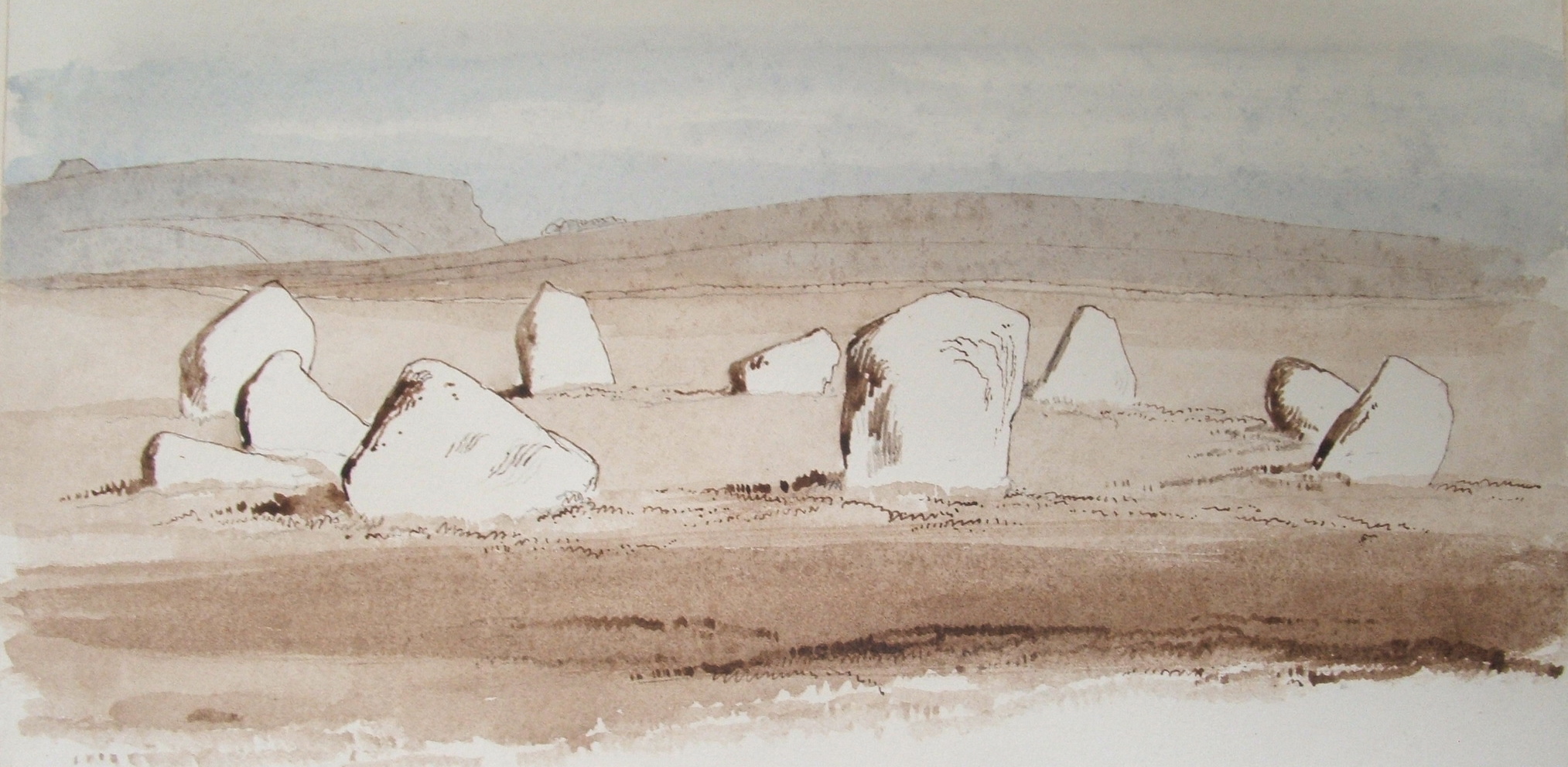
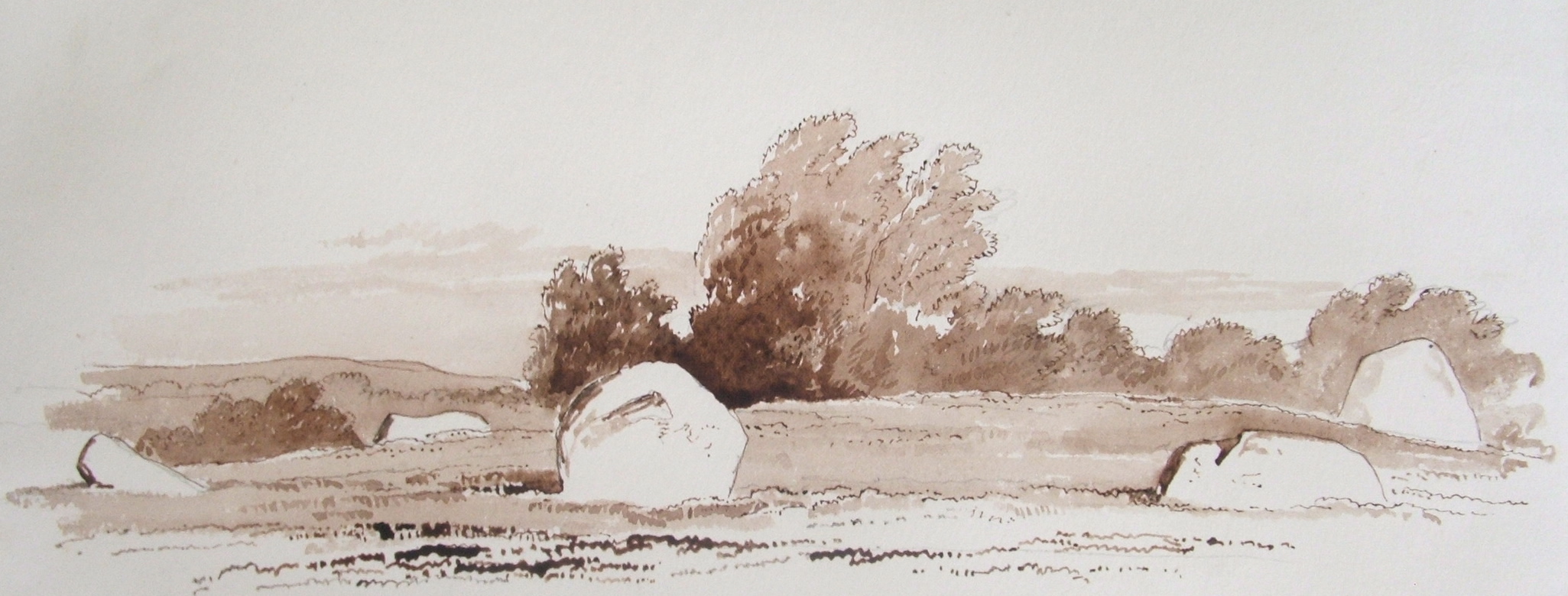
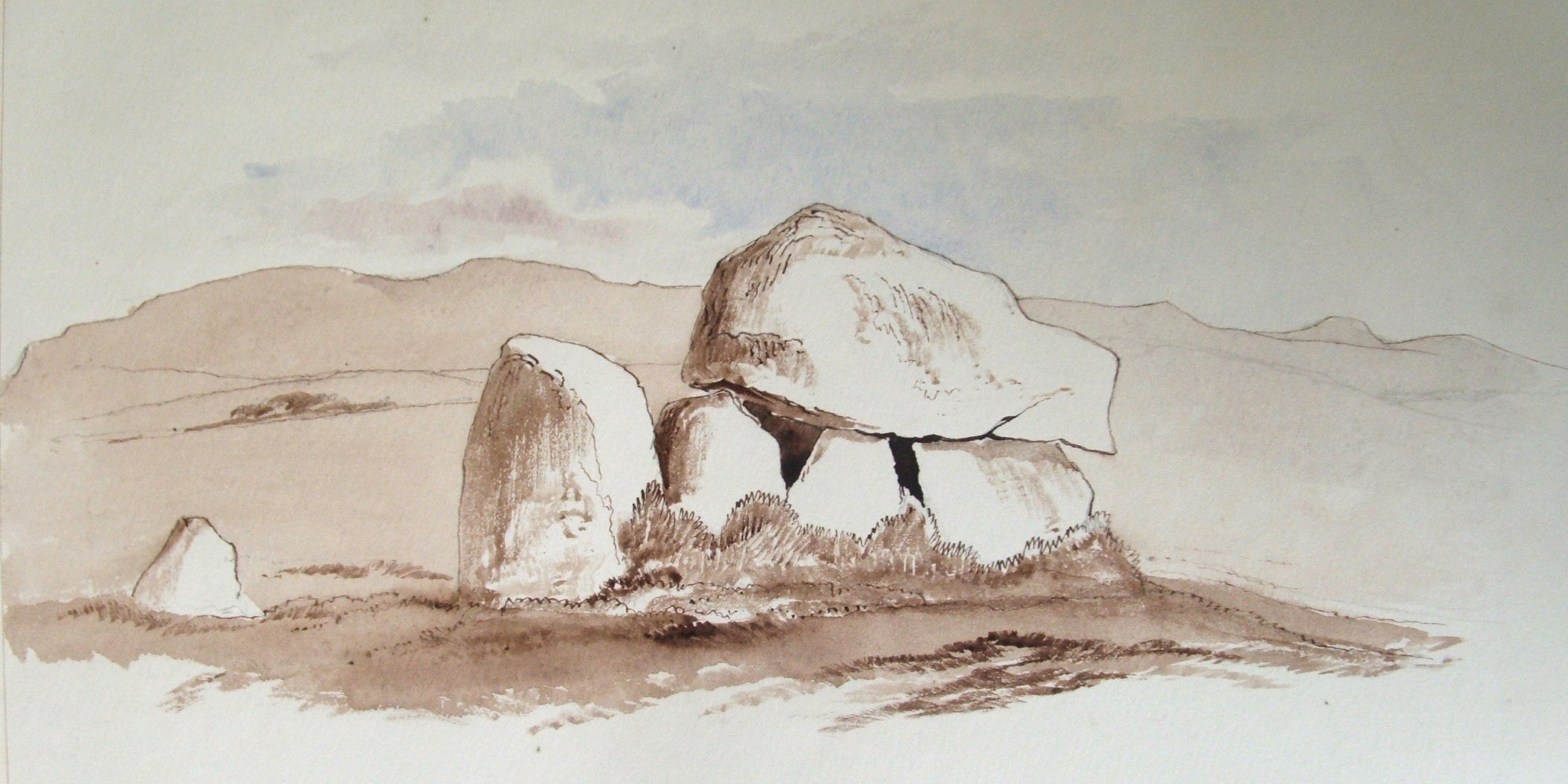
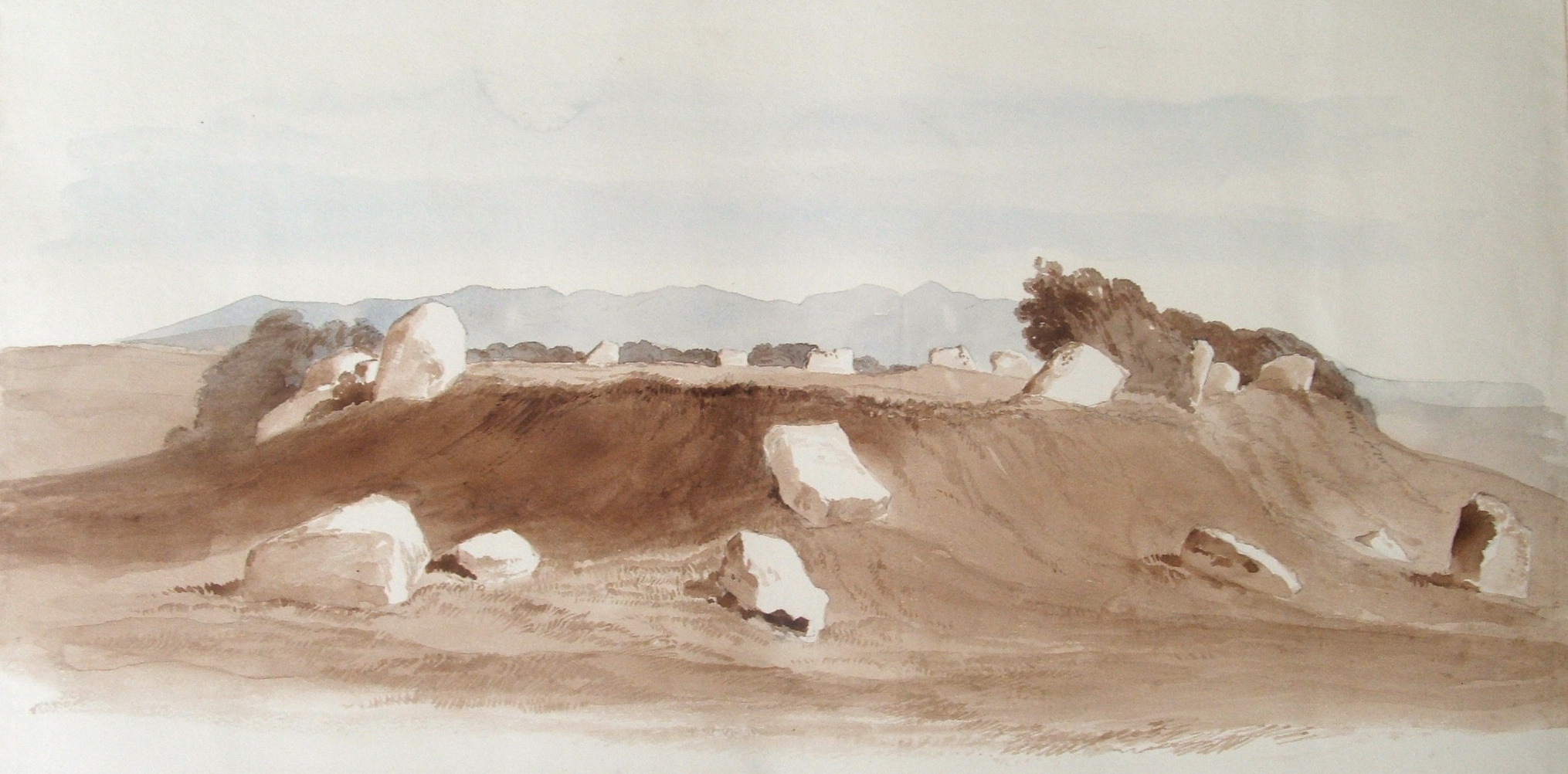
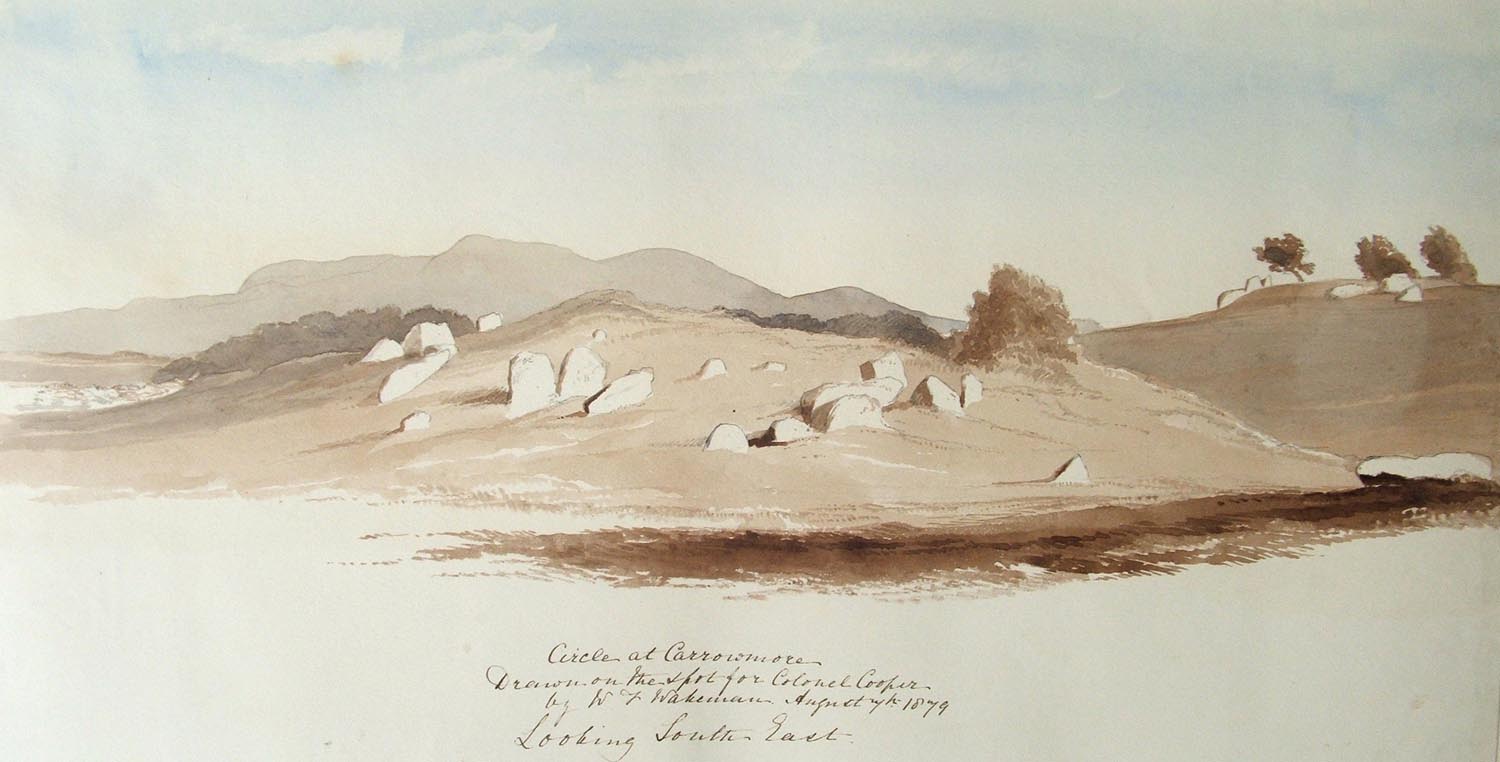
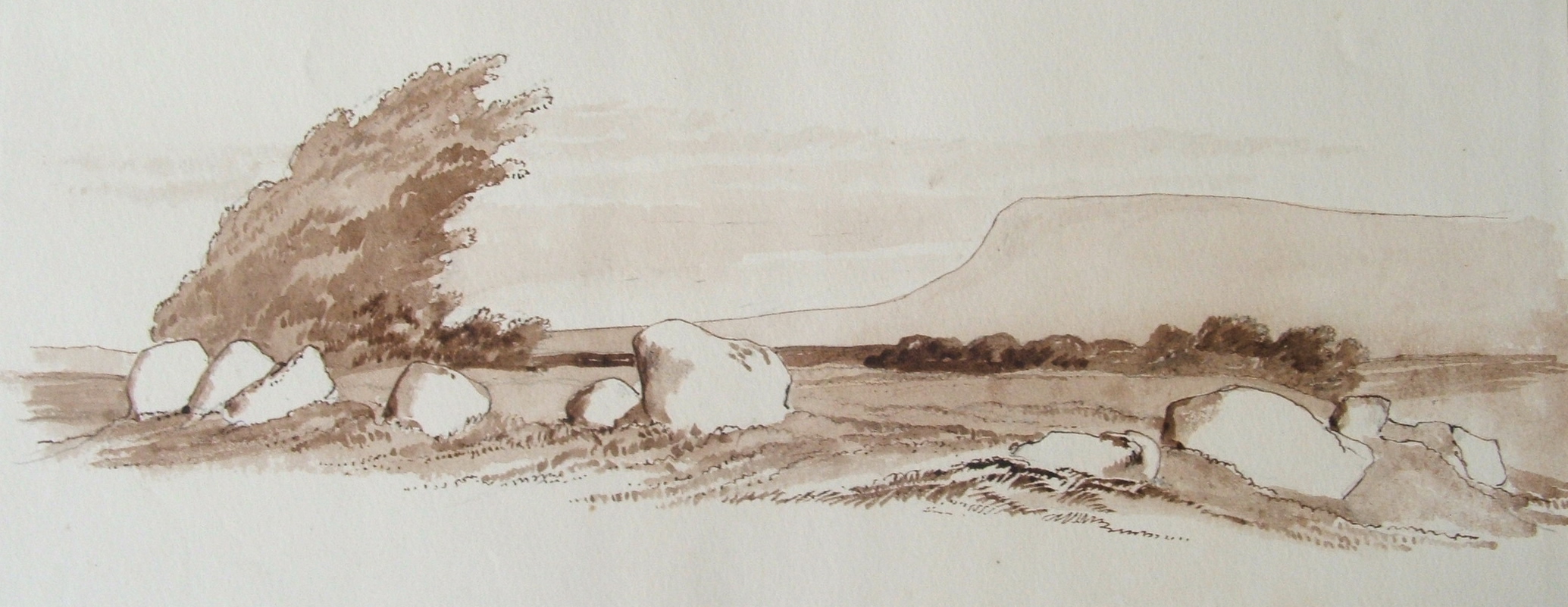
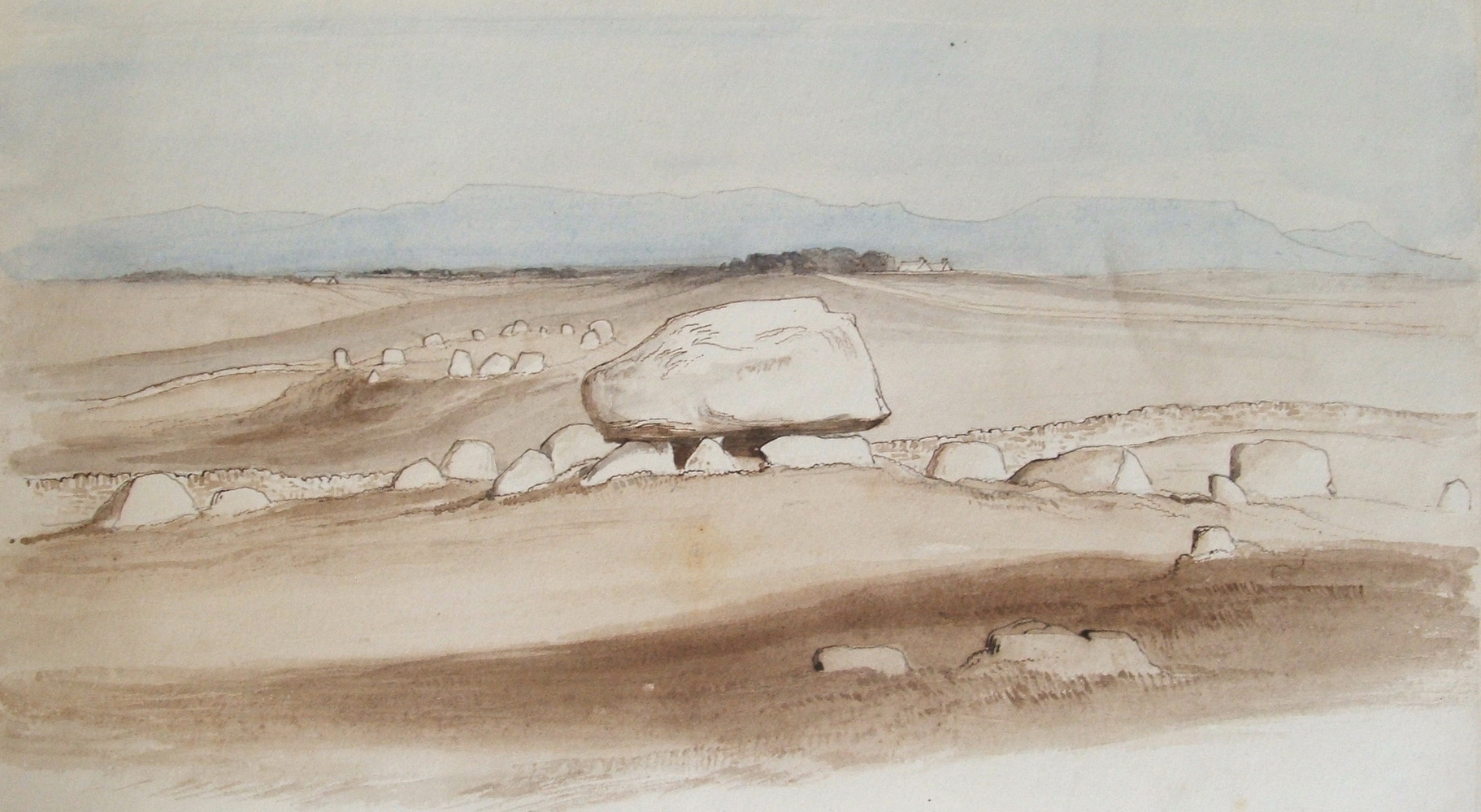
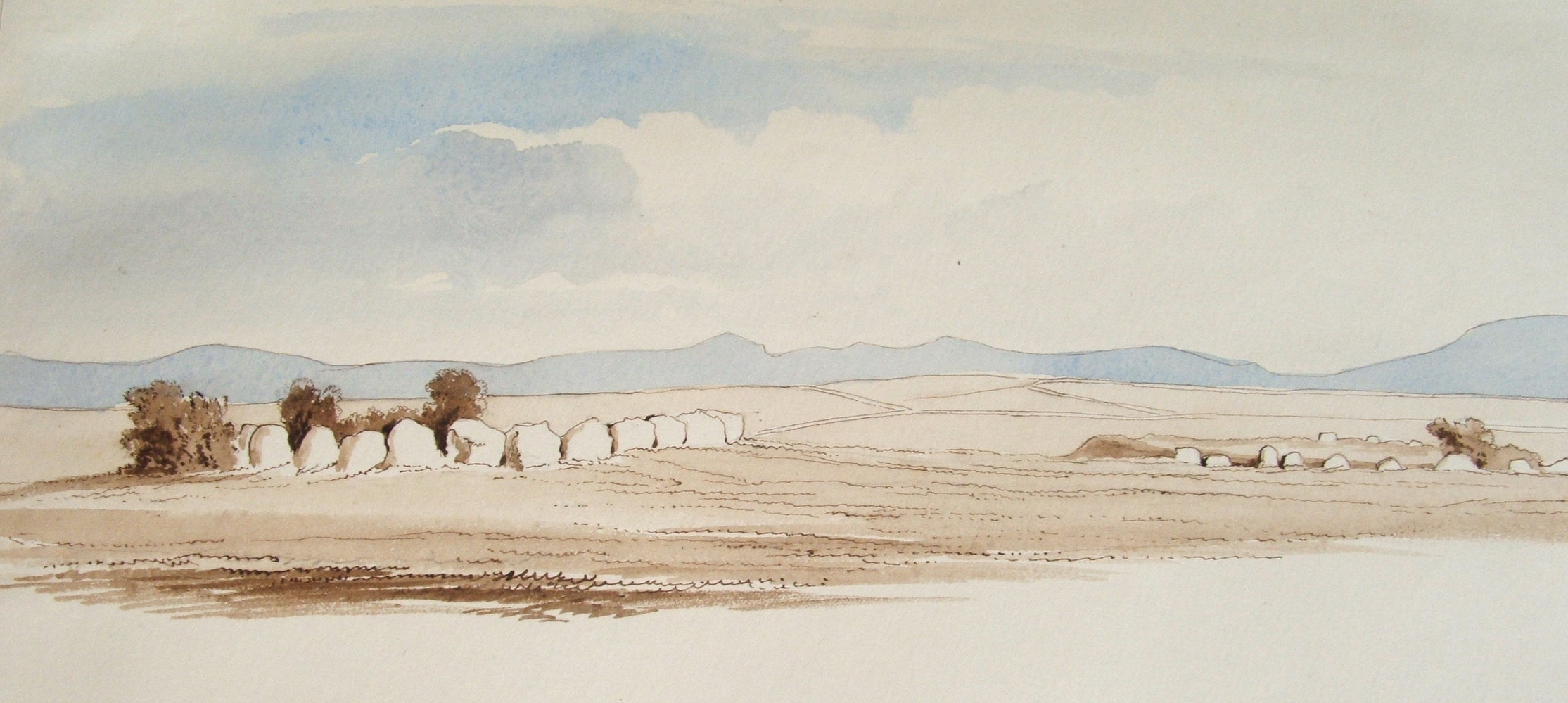
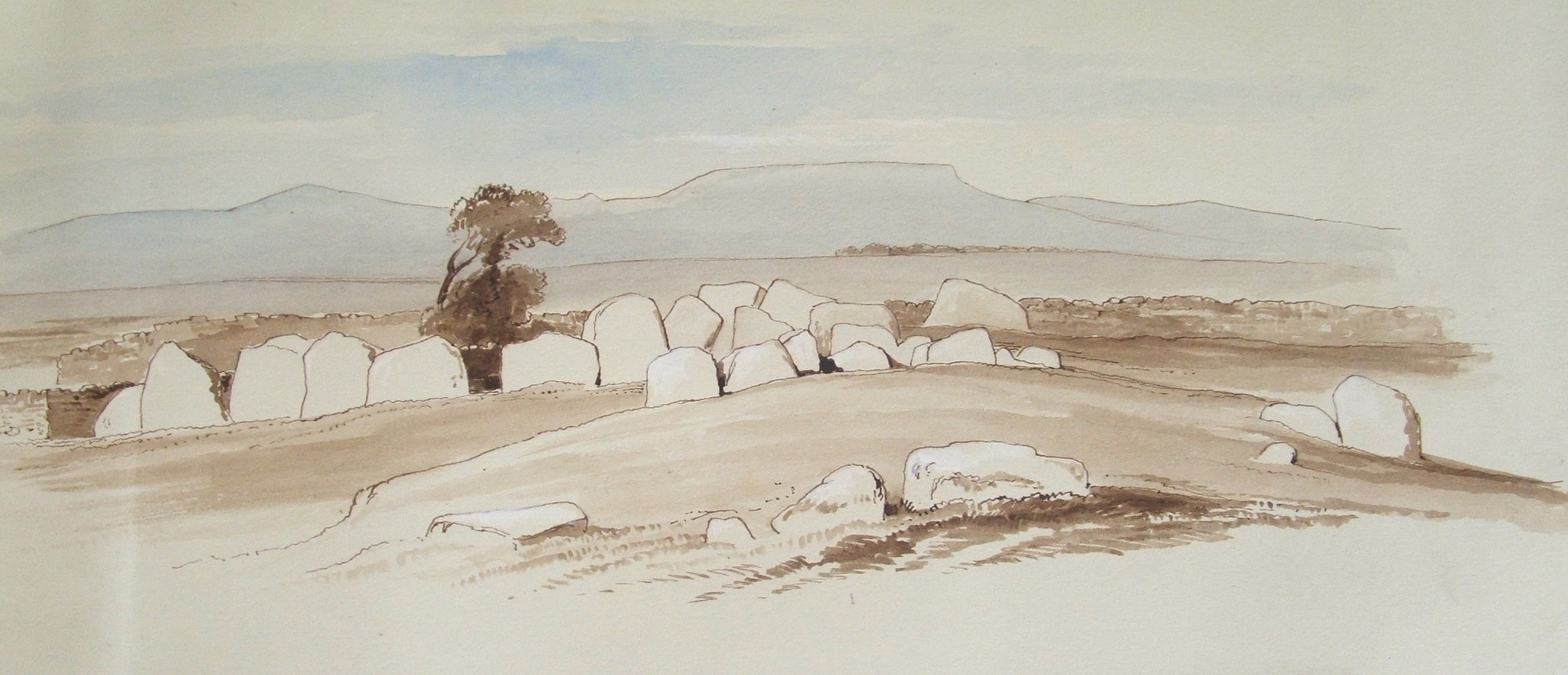
William Wakeman (1822–1900) visited the Carrowmore complex on August 7, 1879, and on that one day created at least fourteen paintings and sketches depicting seventeen of the Carrowmore monuments. Eleven of these are included in this gallery. (Credit: Sligo County Library.)
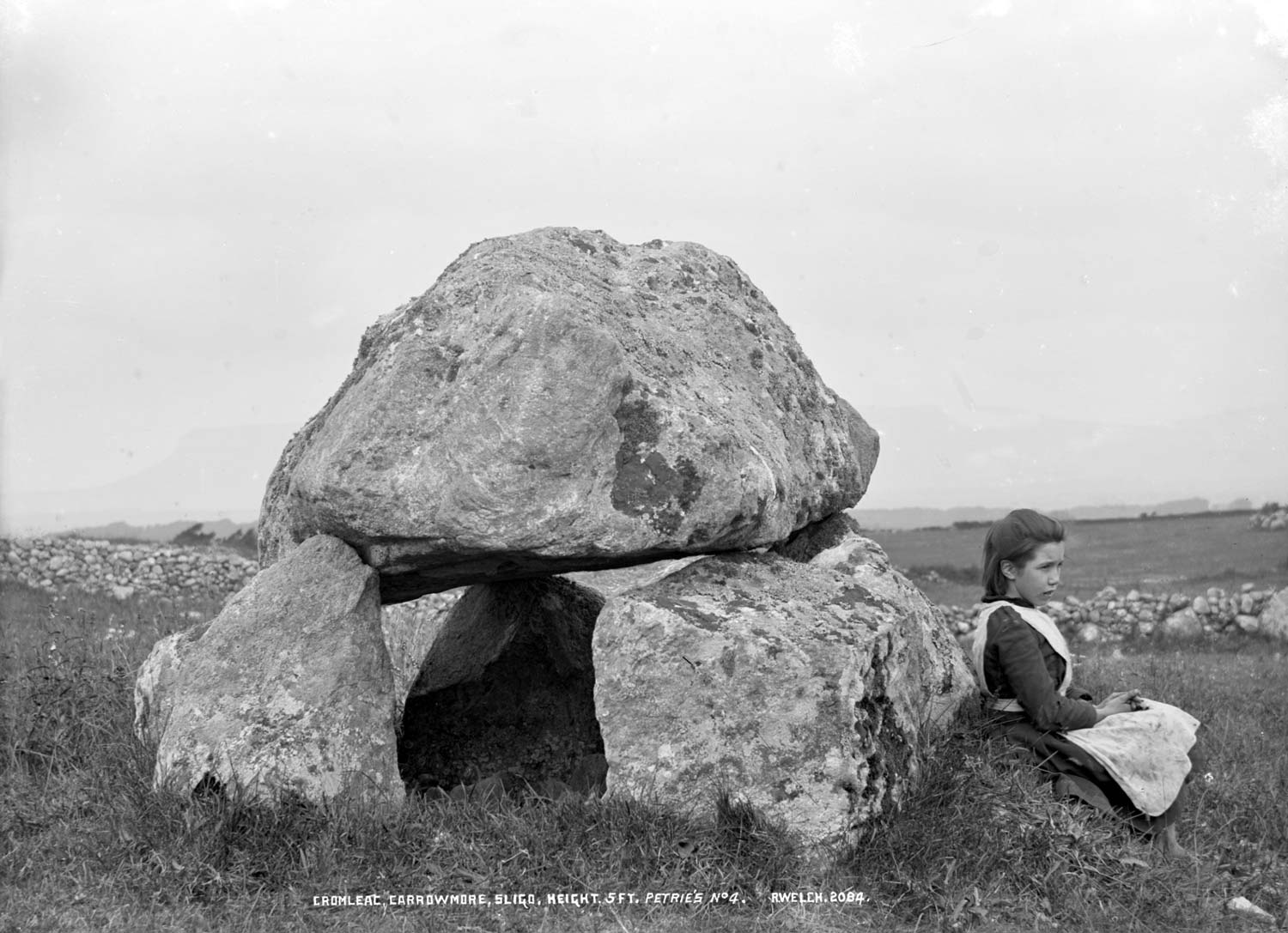
Wakeman’s watercolor sketches are historically significant as they document the monuments as they appeared at that time. Sadly, from 1830 onwards many of the sites were broken up or removed for land cultivation or road construction. By the time of Robert Welch’s photographs from 1896, and the 1910 images of William Green, much of Carrowmore would have been lost. (National Museums of Northern Ireland)
If not for local opposition Carrowmore might have become the county dump, as in the 1970s planners sought to make use of the east side of the monument for that purpose. This area is identified in our VR tour.
Double-click for full-screen view.
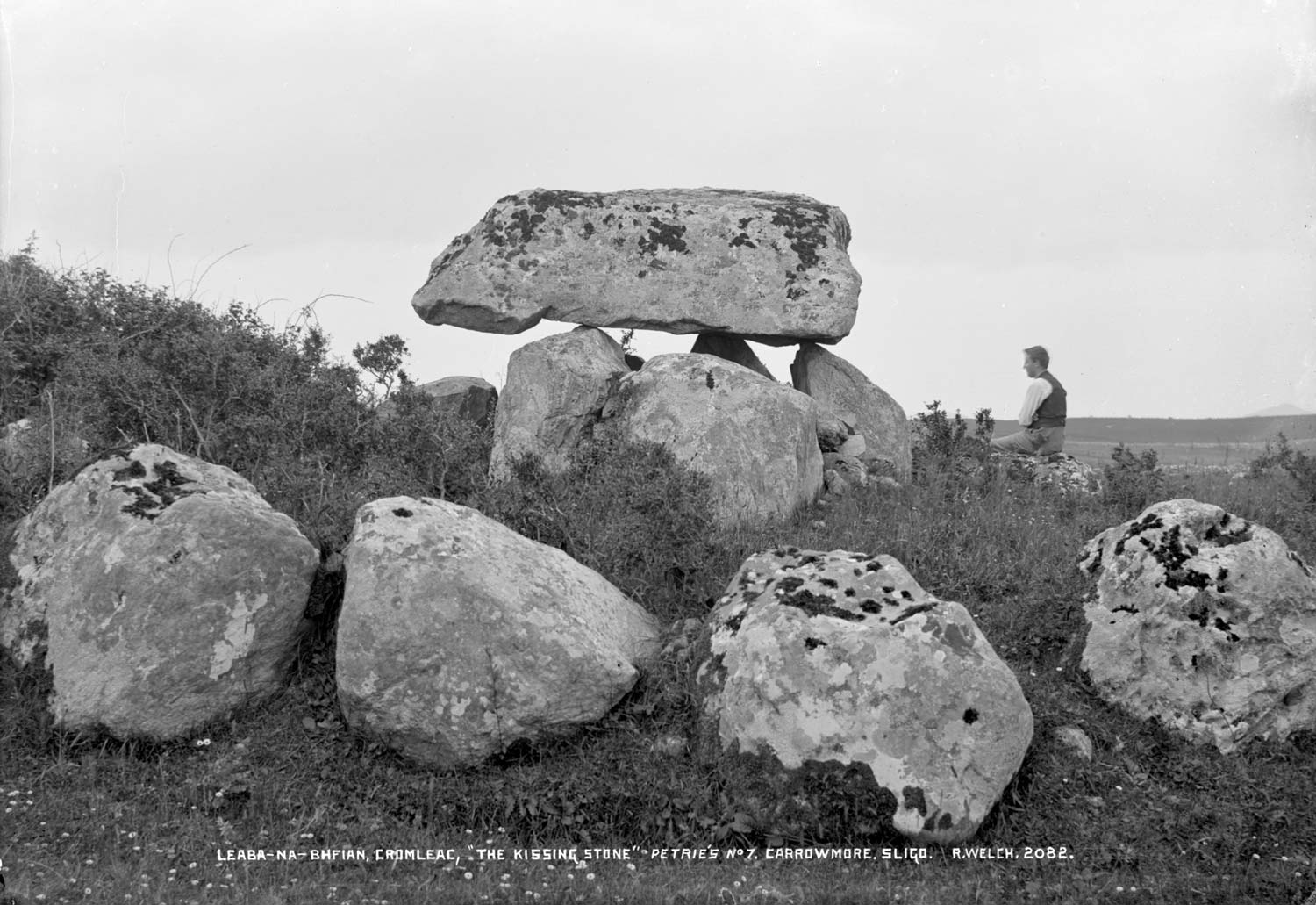
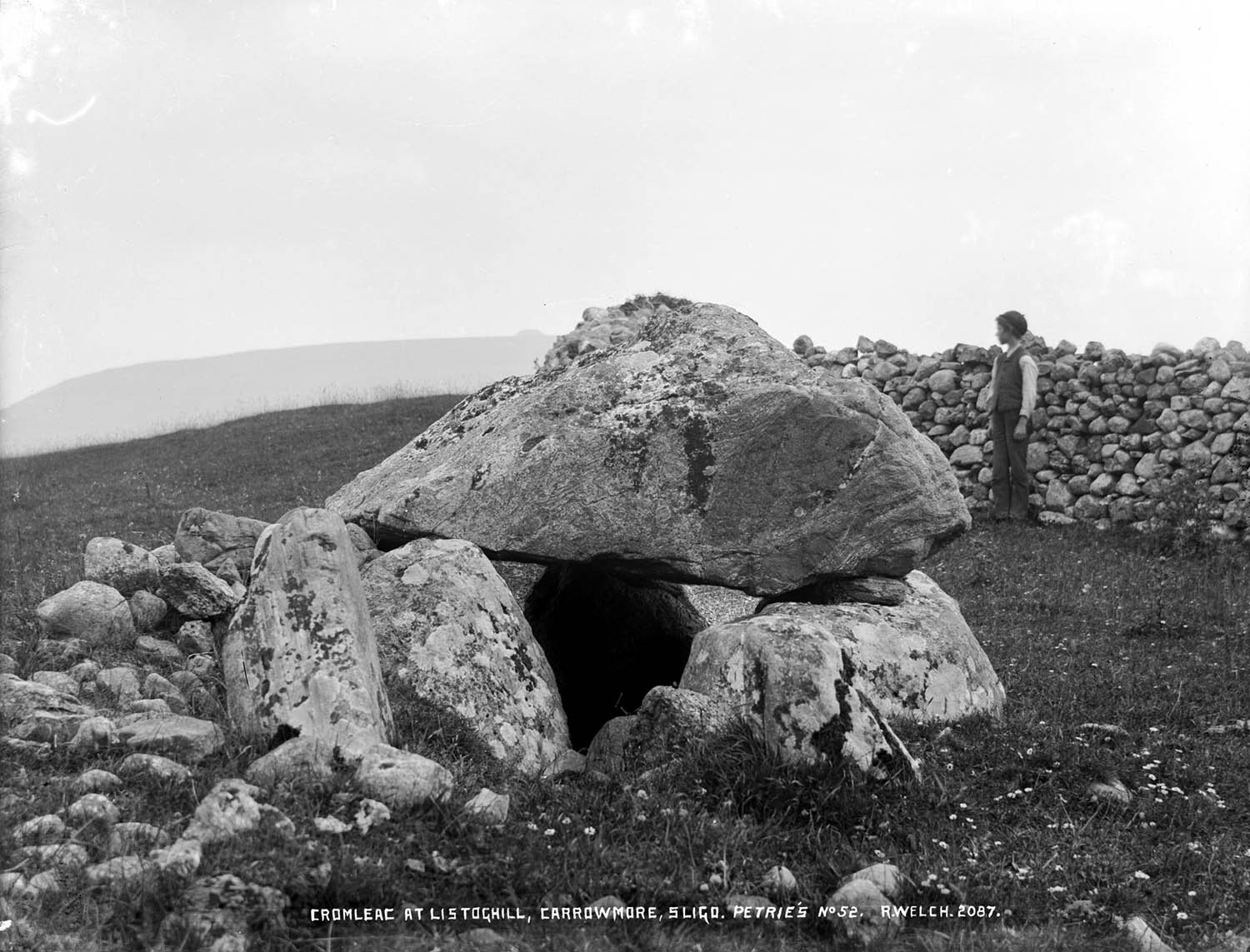
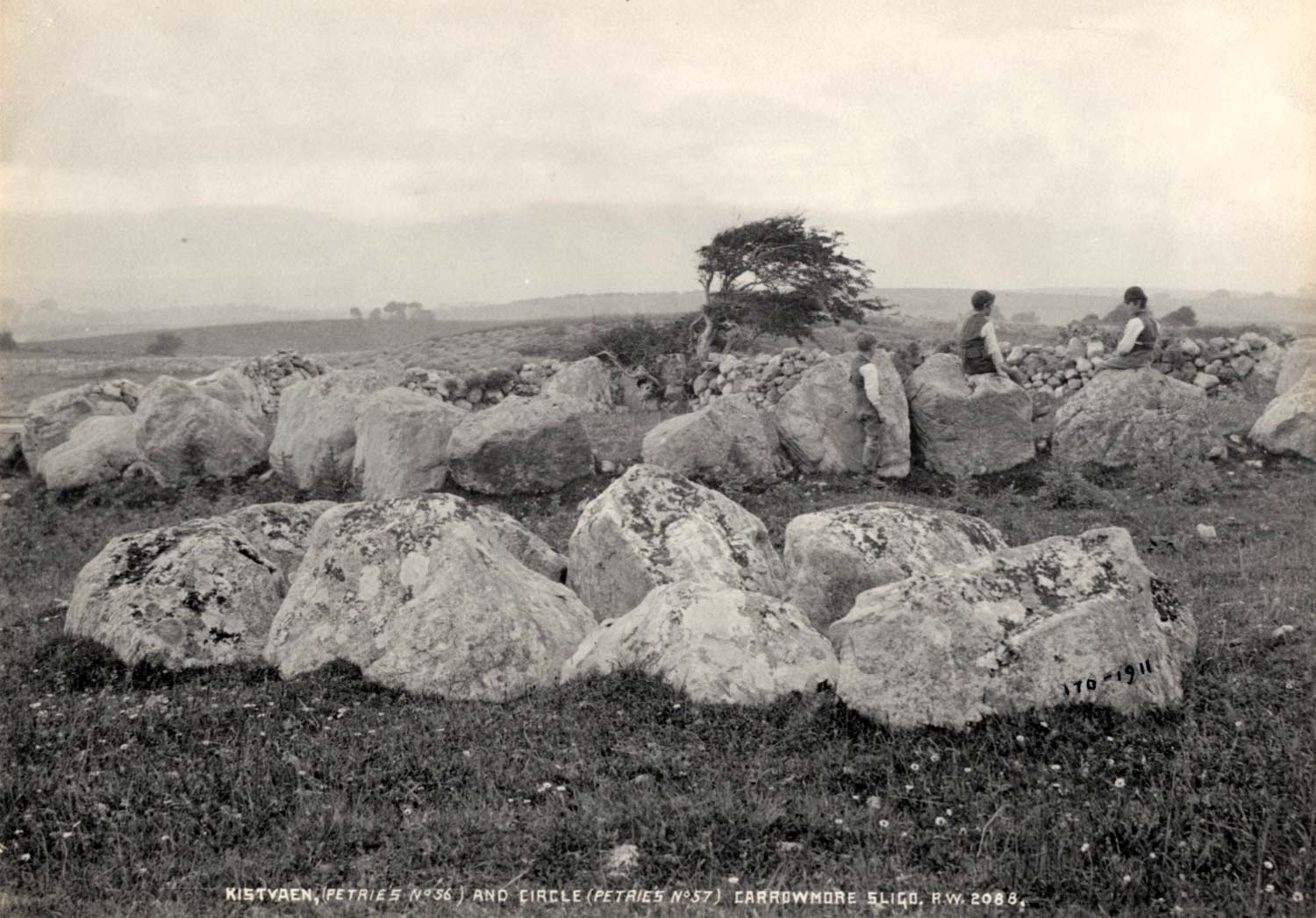
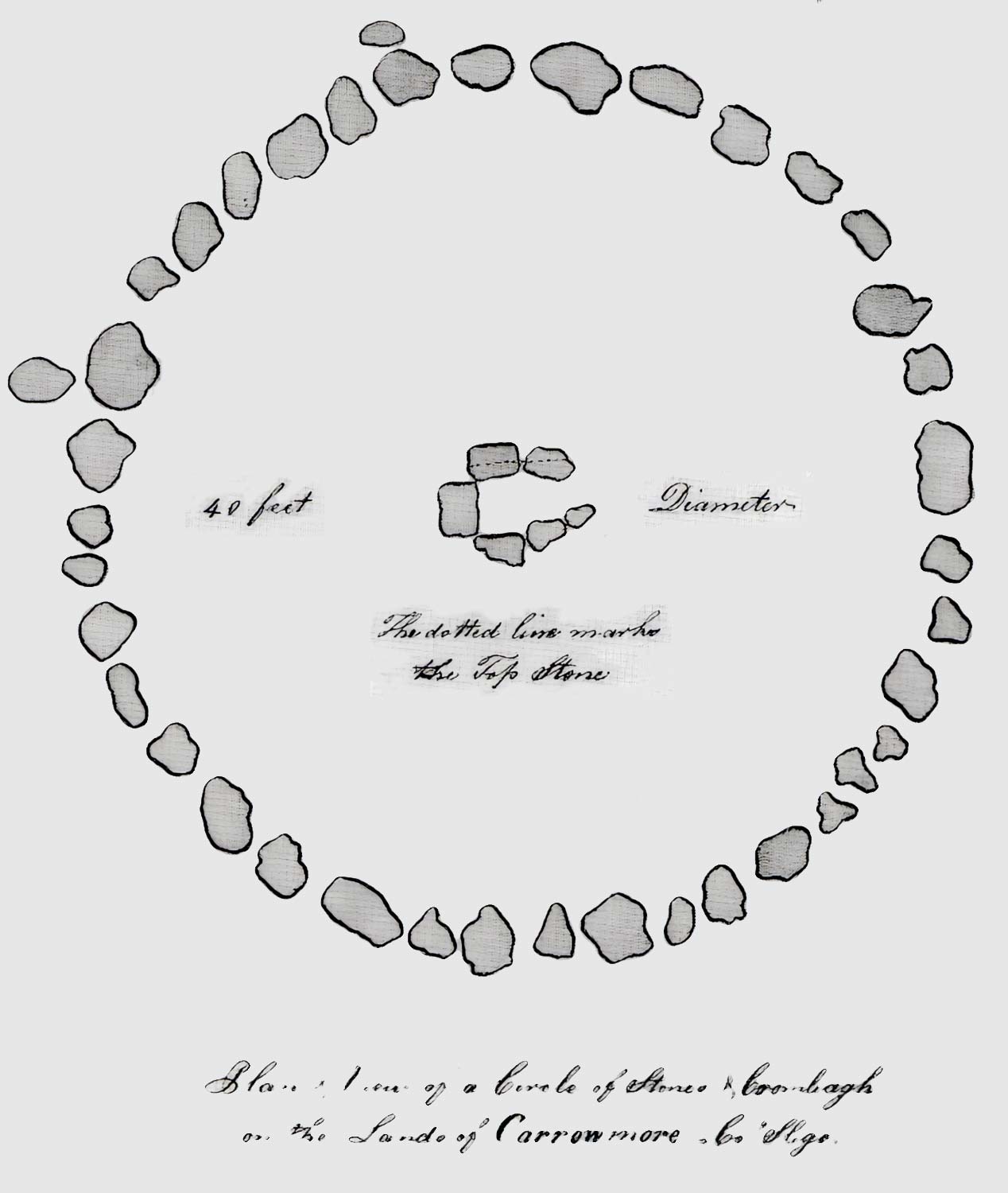
This page would not have been possible without the many years of Carrowmore documentation compiled by Martin Byrne, who generously allowed us to make use of his research.
Click here to see all the notes from this page. Parts of this page were drafted using AI technology; all content has been edited by the author.
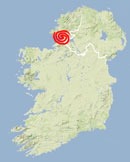
Carrowmore Passage Tomb Cemetery, Co. Sligo
Nearest Town: Sligo
Coolera (Cúil Irra) Peninsula
Latitude: 54° 15′ 5.30″ N
Longitude: 8° 31′ 8.35″ W