25 Dec Seefin Passage Tomb
“You can see why our Neolithic ancestors chose the high point of these mountains to put their burial tombs. The tops of mountains are the interface between land and the sky, and they’re full of magic. Being such prominent locations, they were viewable from the lowlands so everybody knew exactly who they were looking at up there and why they were buried there and how important they were… it’s a magnificent cemetery landscape.”
Rosaleen Dwyer, 2015 1
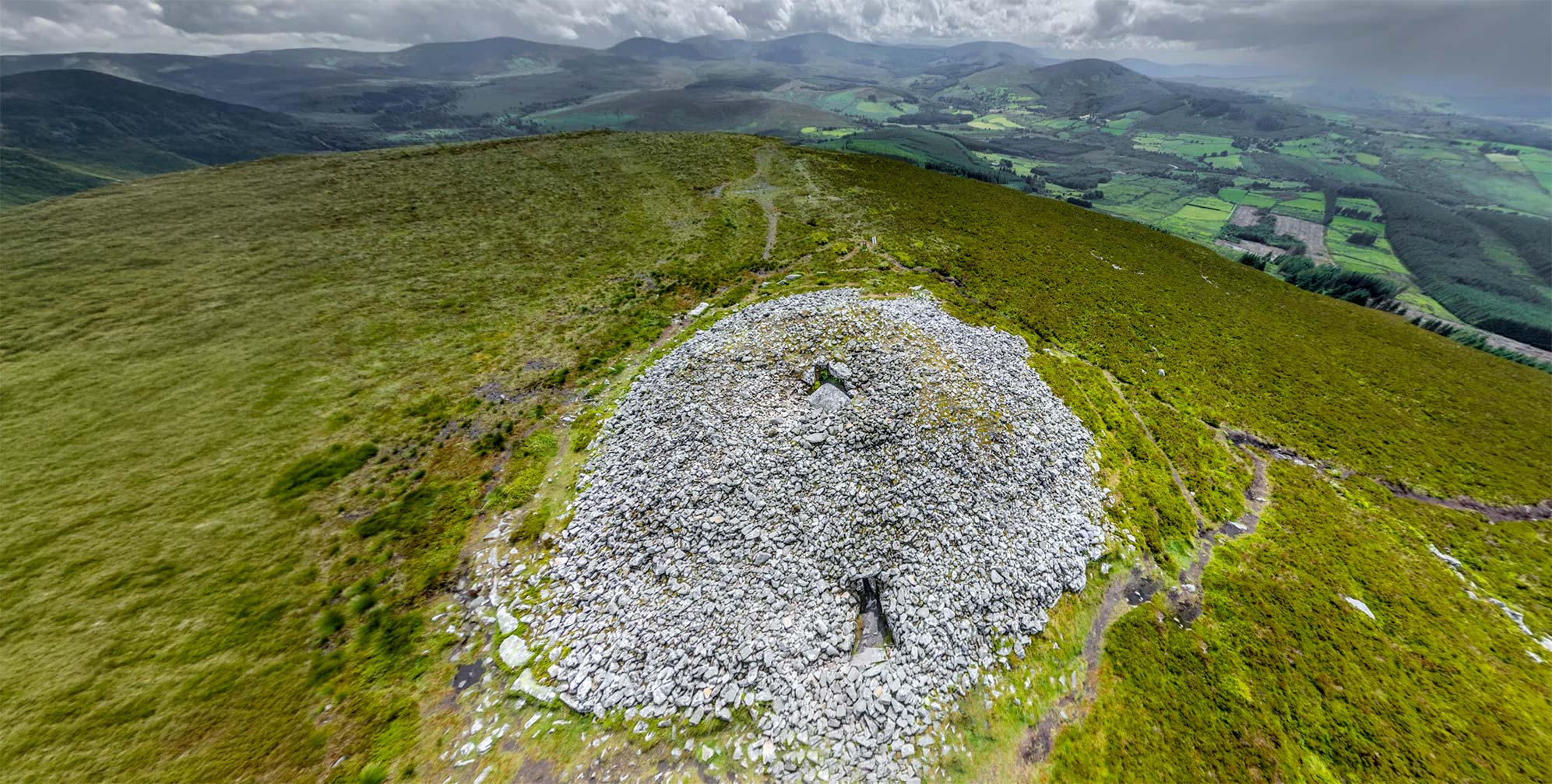
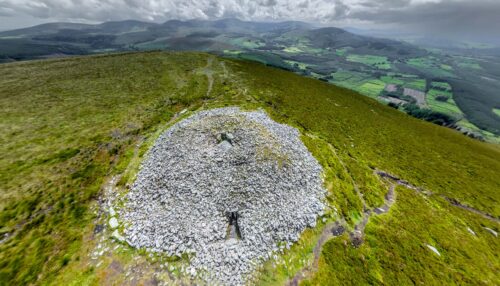
Click the image above to enter the virtual-reality tour.
High on a windswept summit in the Wicklow Mountains, where the tufts of bog cotton bend under the Atlantic gusts, a dome of stone breaks the skyline. This is the Seefin Passage Tomb—Suí Fhinn, “Fionn’s Seat”—a 5,000‑year‑old monument that presents somewhat of an archaeological enigma.
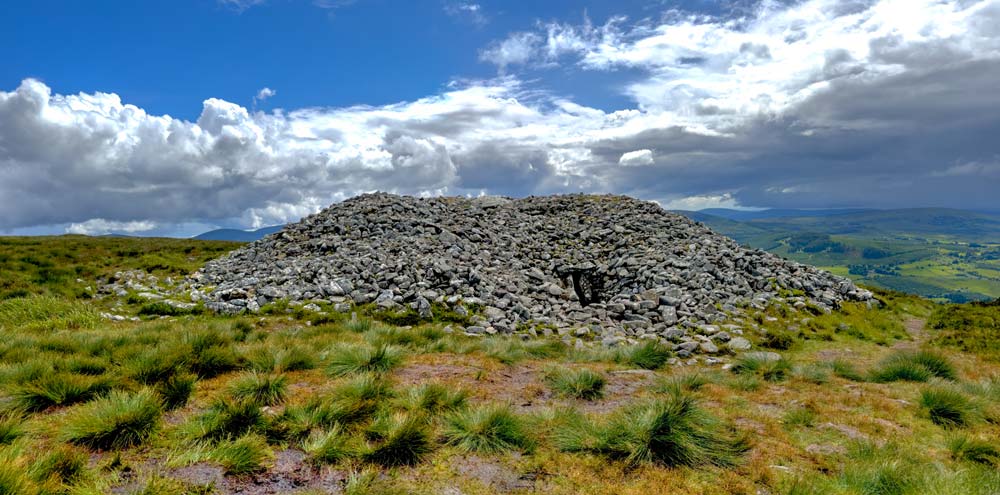
Seefin crowns a 650‑meter(2133 ft.) peak on the Dublin–Wicklow border, just south of the military firing ranges at Kilbride—avoid making a wrong turn in the fog. From below it looks deceptively simple: a grey cairn of granite rubble, roughly 24–25 meters (79-80 ft.)across and about 3 meters (10 ft.) high, its flanks softened by peat and lichen.
Only when you climb to the summit—across rough tracks, boggy hollows and old forestry routes—does the structure reveal its complexity.
In the early 1930s, archaeologist R. A. S. Macalister clambered up here and realized the “heap of stones” concealed a sophisticated passage tomb, architecturally similar to the great Neolithic cemeteries at Loughcrew and Newgrange. Clearing the interior over several days—some of the top lintels had collapsed—he exposed a long, tight passage leading into a cruciform chamber with side recesses, clearly an elaborately planned monument on a mountaintop.
“The chamber lay partly roofless, and had apparently been rifled and left derelict centuries ago. It was almost full of stones, thrown into it, as we were informed, by the soldiers in the camp for a pastime. But enough was exposed to show that it was a structure of considerable architectural pretensions, and that it would be worth clearing out.” 2
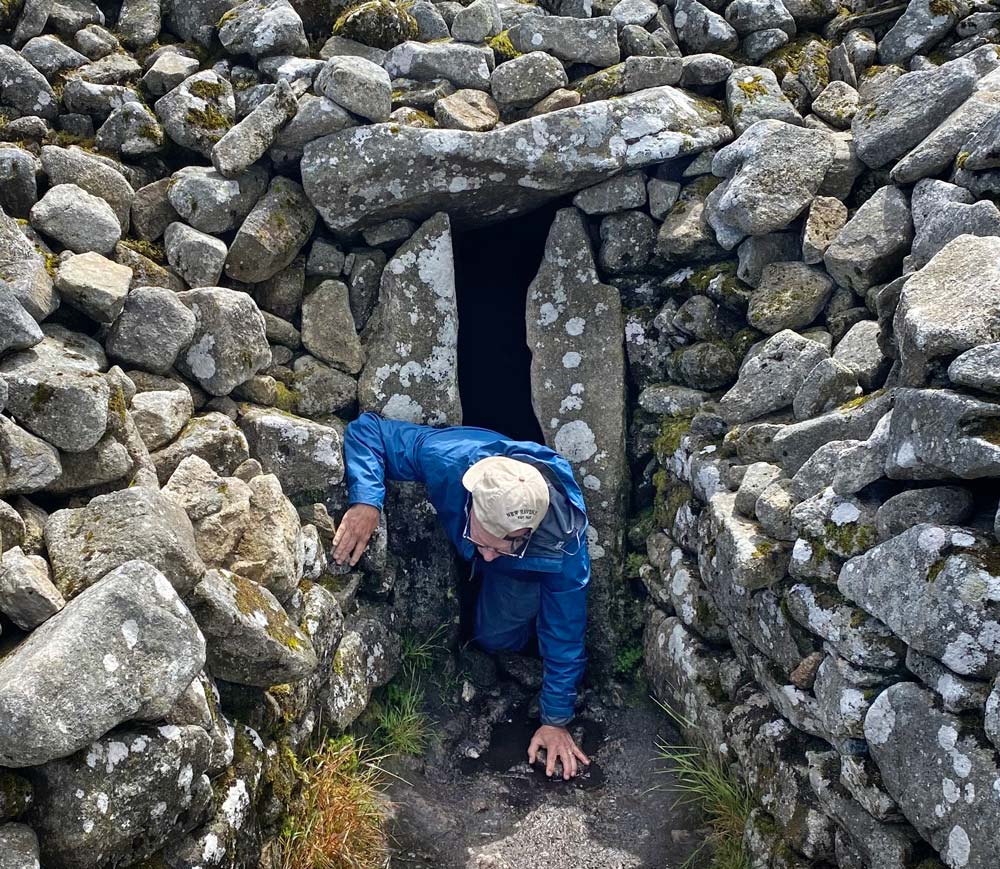
Today, visitors can enter through the hole in the top, or squeeze through the narrow passage that Mcalister used (see photograph below). Emerging into the heart of the tomb, you find yourself encircled by slabs of Wicklow granite, their corbelled roofing partly fallen, the sky visible through the ragged opening overhead. In our VR tour (top) the monument is entered through this roof-top opening. We should mention, however, that posted signs warn that the stones are unstable and ask visitors not to enter the tomb.
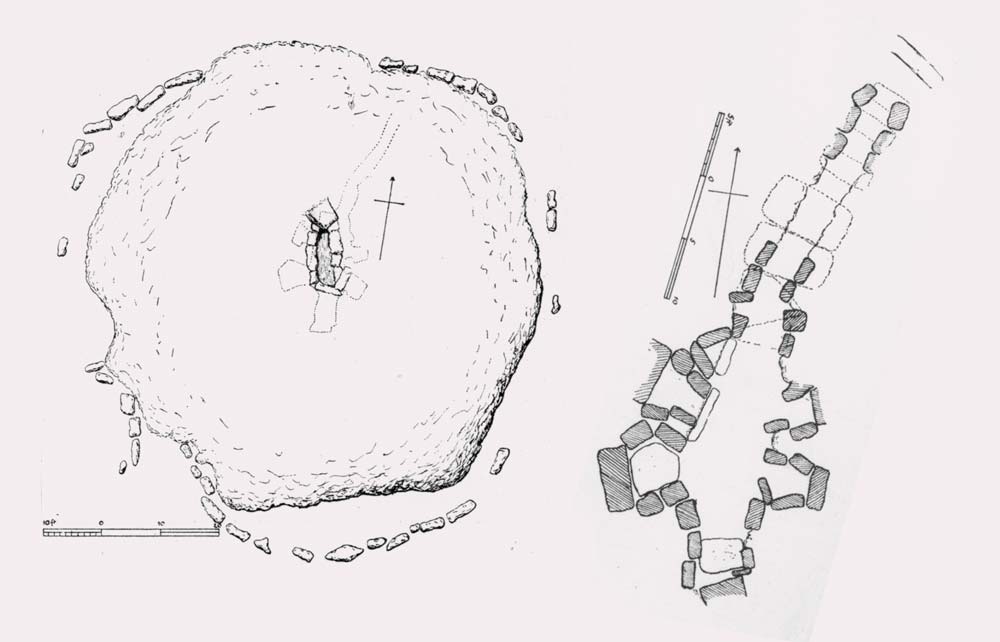
Macalister’s plans show the monument in precise detail. The cairn is encircled by a discontinuous kerb of stones up to 5 feet long, many shifted but still clearly marking the cairn’s original profile. The passage, about 7 meters (23 ft.) long and in places scarcely 2 feet wide, runs slightly askew to the axis of the inner chamber (see diagram above).
At the core lies an oblong central chamber, about 4 by 2 meters1(3 x 6 ft.), from which three further recesses open: one to the south, and one on each side. These side recesses bring the full width to about 3.8 meters (12½ ft.), creating a cruciform plan, as is the norm for Irish passage tombs. Low sill‑stones, where visible, mark thresholds into some of the recesses—small, deliberate steps between zones of the dead.
What Macalister did not find was just as striking. After days of clearing fallen roofing stones and centuries of rubble, he reported “no finds of any kind”—no bones, no pottery, no tools. A tomb of this scale, built around 3300 BC at immense communal cost, was apparently empty: an enigma that continues to puzzle archaeologists today. It is unlikely that any grave robbers would have had an interest in the traces of the dead.
Did the community responsible for this particular three-tomb megalithic cemetery in the hills south of Dublin decide to move elsewhere, and take the remains of their deceased forebears with them? Or did community move away right after the tomb’s construction, before it was used as intended? Or was Seefin always a cenotaph, a symbolic “marker in the landscape,” as one modern account suggests, never meant to contain a specific body at all? The answer to these questions may have to wait until the unopened companion tombs of Seefingan (724 meters or 2,375 ft.), which is identified in the aerial VR view, and Seahan (647 meters or 2,123 ft.) are excavated.3
This is a network of intervisible monuments strung across the Dublin–Wicklow skyline. A recent interpretive trail calls them “sacred summits,” vantage points from which Neolithic farmers could look out over the lands they cleared, enclosed, and sowed. In that reading, Seefin’s emptiness may emphasize its role as a territorial beacon: a mountain‑top declaration that “this world is ours.” 4
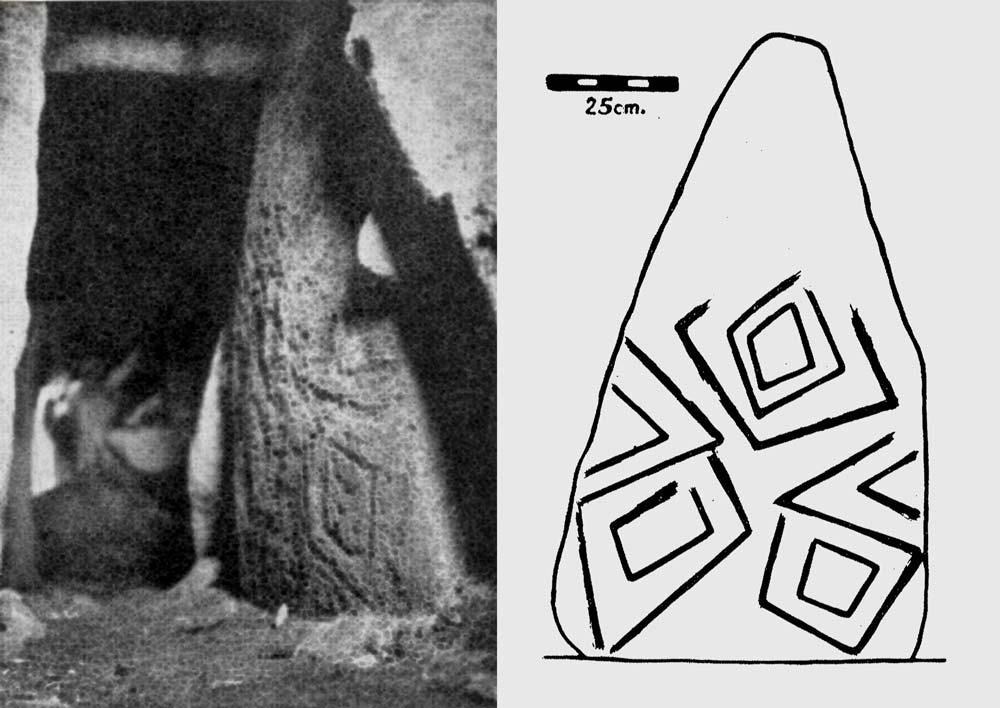
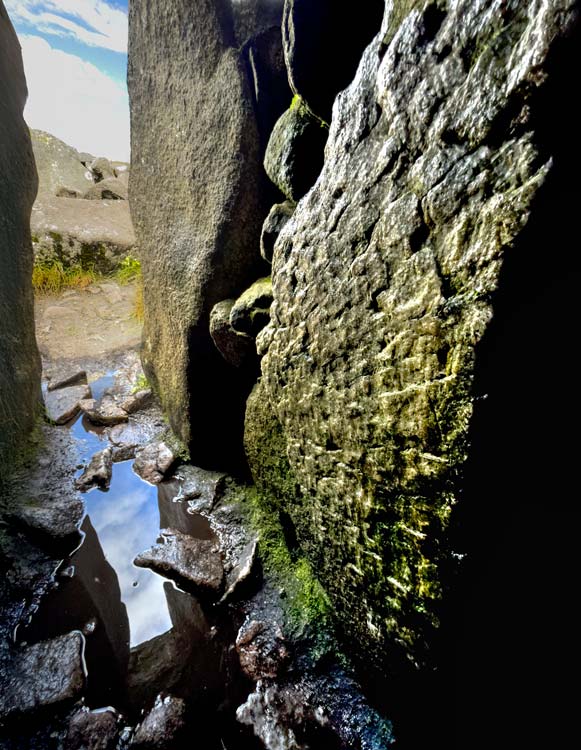
Light is scarce inside Seefin, but what caught the eye of Macalister in 1932 were the places on which human hands altered the rock. In the passage, two tall orthostats—“Stone 4” and “Stone 5” in Macalister’s numbering—carry fine, shallow engravings.
The first, “Stone 4,” is about 1.3 meters (4 ft.) high and decorated with a lattice of lozenges and oblique lines, chiseled into the granite by careful pocking. Macalister’s photograph of this stone, along with Etienne Rynne’s 1963 rendering may be seen here. Its neighboring stone bears a single prominent lozenge with paired lines projecting downwards, like a stylized pendant or abstract emblem.
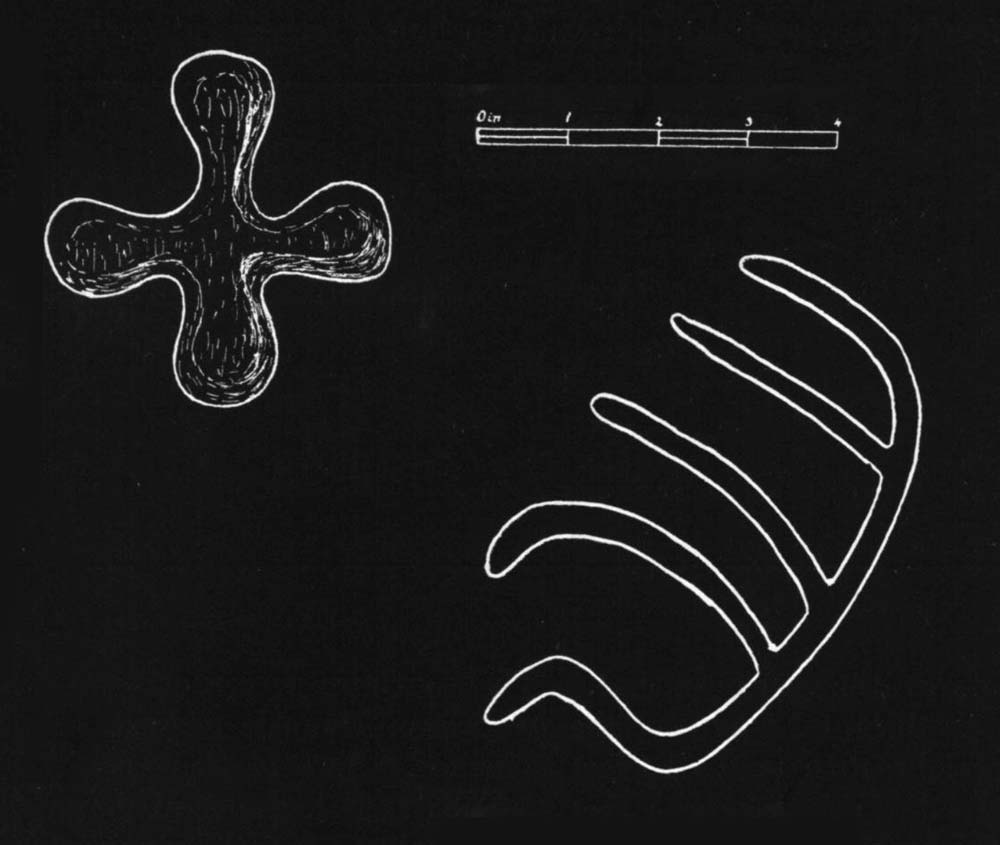
On a roof slab just below the modern access hole, Macalister identified a “hand” motif: five radiating lines that recall engraved hands in French dolmens of the Morbihan.
Long after the last Neolithic ritual was performed here, the people of early medieval Ireland were still looking up at Seefin and telling stories. The Irish name Suí Fhinn—“Finn’s Seat”—links the mountain to the legendary hunter‑hero Fionn mac Cumhaill and his warrior band, the Fianna. From Glenasmole, the glacial valley below, poets imagined Fionn watching the deer hunts from this very cairn; the valley is a key setting in the Fenian tales, a wild borderland where heroes chase boar, fight monsters, and slip between this world and the next.5
For archaeologist Elizabeth FitzPatrick and her colleagues, Seefin is one of many “Finn places” that cluster on exceptional landforms across Ireland and Scotland: bare summits, geological contact zones and resource‑rich ridges where prehistoric monuments, natural abundance, and later myth intertwine. These Suí Finn sites commonly sit at territorial edges and often carry cairns like Seefin’s, echoing boundary roles that may stretch back into prehistory.
“Geological unconformity is synonymous with Finn’s condition as an outsider. He and his world are neither this nor that….In Finn’s world, however, marginality produces exceptions and wonders: hunting grounds abounding in deer, wild swine/boar, badger, hare and wolf, dark oak forests and entrances to the otherworld.” 6
Modern mythographers have gone further. Some writers describe hilltop passage tombs like Seefin as literal “entry points to the Otherworld,” stones that mark thresholds between land and sky, life and death.7 Standing at the tomb’s entrance—a dark slit in the cairn framed by tall orthostats—visitors talk of peering into a portal.
The pregnant mound of stones, with its narrow, birth‑like passage, has even been read as a cosmic womb, a symbolic route for souls between worlds. Note the photograph of this author squeezing himself out of this tight passage after making the photographs for the VR tour on this page.
Reaching Seefin today still demands effort. From the small lane off the R759, a rough track climbs through conifer plantations, then breaks out onto open ground where bog grasses replace trees and the wind takes hold. Walkers skirt the boundary of the army range, following fence lines and faint hill paths before the cairn finally rises ahead.
Inside, the air cools and sound softens. Through the hole in the roof, cloud‑shadows race across the floor. Step back outside, and the view open in every direction: to the quilt of fields in the lowlands, to dark lakes cupped in glens, to the cairn on Seefingan calling across the peat—a path extends from Seefin up to its sister monument.
Seefin is often said to be older than the Pyramids, older than Stonehenge. Yet what lingers most is not its age but its layered life. Once a focus of Neolithic ritual, then a plundered cairn, then a node in Fionn’s mythic map, and now a hillwalker’s goal, Seefin is less a static “tomb” than a continuing conversation between people and place.
On a clear evening, as mist gathers in Glenasmole and the last light catches the entrance stones, it’s easy to believe that conversation is not yet over.
Click here to see all the notes from this page. Parts of this page were drafted using AI technology; all content has been edited by the author.
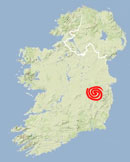
Ballinagee, Co. Wicklow
Nearest Village: Kilbride
Latitude: 53°11’33.7″ N
Longitude: 6°22’41.6″ W