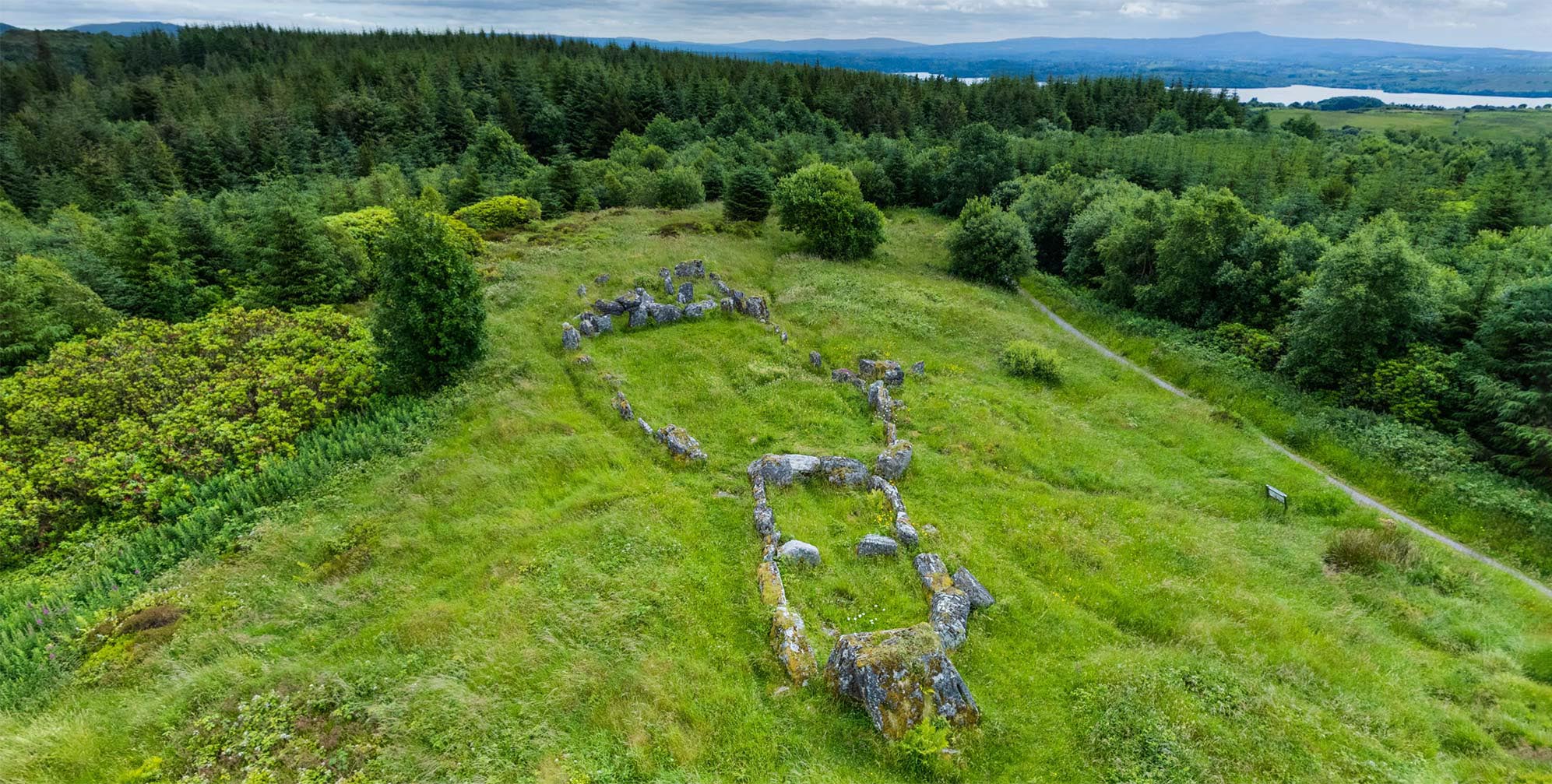
05 Feb Ardagh Ringfort
“When…the elegance of form, the rich and harmonious colouring of the component parts, as well as the variety and beauty of the designs, and the surprising skill of the workmanship are taken into consideration, we have every reason to rejoice that so exquisite a specimen of the skill and taste of the workers in metal of this country nearly one thousand years ago has been thus so strangely and unexpectedly brought to light.”
Lord Dunraven, 1873 1
“The Ardagh Chalice is almost synonymous with the National Museum of Ireland and with artistic achievement in early medieval Ireland. In fact, the chalice is one of the great European treasures of its time.”
Maeve Sikora, 2002 2
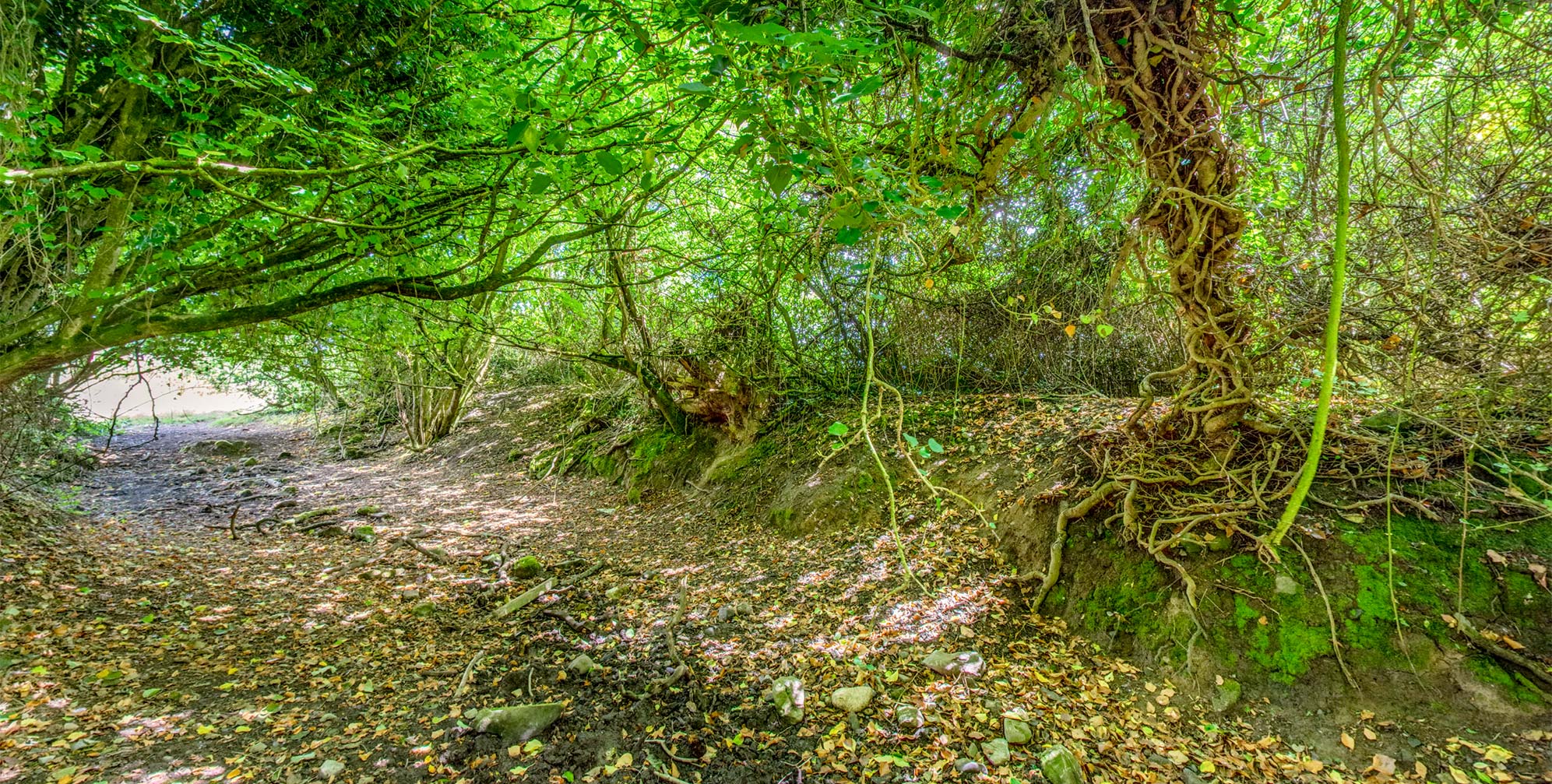
Click the image above to enter a VR tour of a surviving bank and ditch of the Ardagh Ringfort.
There are an estimated 40,000 ringforts remaining in Ireland, most of which were the fortified homes of high-status farmers, and perhaps their cattle as well. Many are well preserved, and all are now protected under the National Monuments Act. In earlier times it was belief in the powerful supernatural denizens of these “fairy forts” that stopped many a farmer from flattening the earthen walls and extending the tillable land.
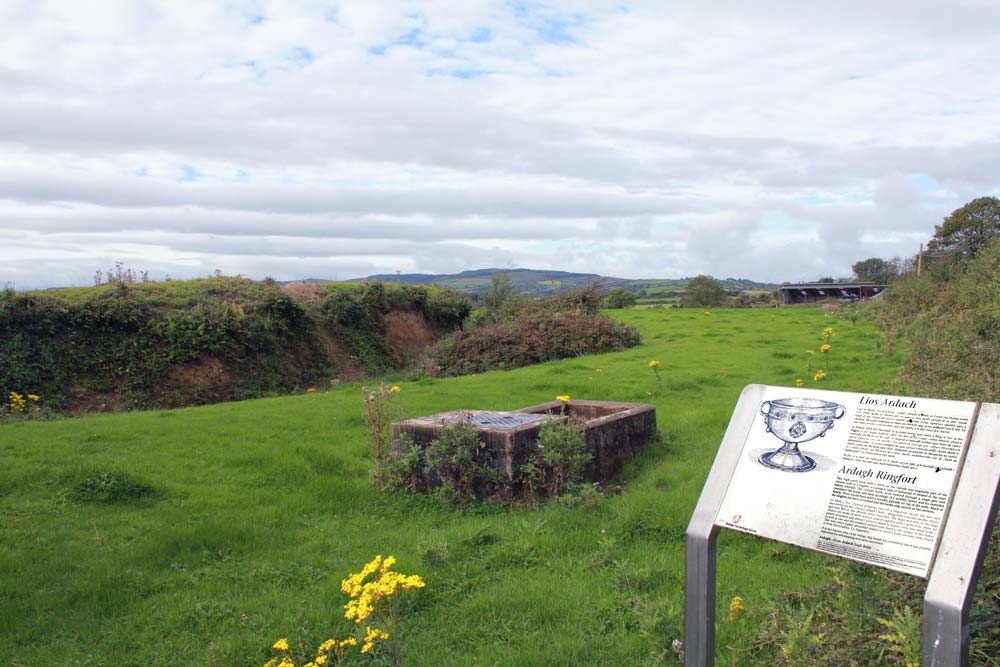
The Ardagh Ringfort, however, was protected by neither state nor superstition when it most of it was ploughed down in the mid-19th century. Owned by the Church, there would thus be no fear of the fairies. And the National Monuments Act did not come to the rescue until 1930. Today only a forlorn segment of the northern inner wall, and a slightly more complete remnant opposite, survive. Why then is this much-maligned fort’s name celebrated in Ireland and beyond?
Found buried within it was the Ardagh Chalice.
The two surviving remnants of the fort hold together several strands of Irish history: a Viking‑age hoard, an 8th‑century masterpiece of Christian metalwork, the trauma of famine, and older beliefs about fairy forts and hidden powers in the land. This is the setting in which the Ardagh Chalice emerged from the soil and into modern Irish consciousness.
The Ardagh ringfort, or rath, known locally as Reerasta, is described in the earliest scholarly report as “of the usual character, and of average size,” with an internal diameter of about fifty‑seven yards, situated on land then held by a widow, Mary Quinn, but owned by the Church.
At some point in the decades after the Ordnance Survey’s 1842 work in the county, but before 1868, much of the bank had been leveled for tillage, leaving only the northern and southern sections of the once circular fort (see animation below).
However the place already carried a heavy freight of stories: local tradition claimed that during the “persecutions of the Danes” people took refuge in the fort, that Mass was celebrated there in later penal times, and that a great battle before the age of Brian Boru had strewn human bones along the nearby road.3
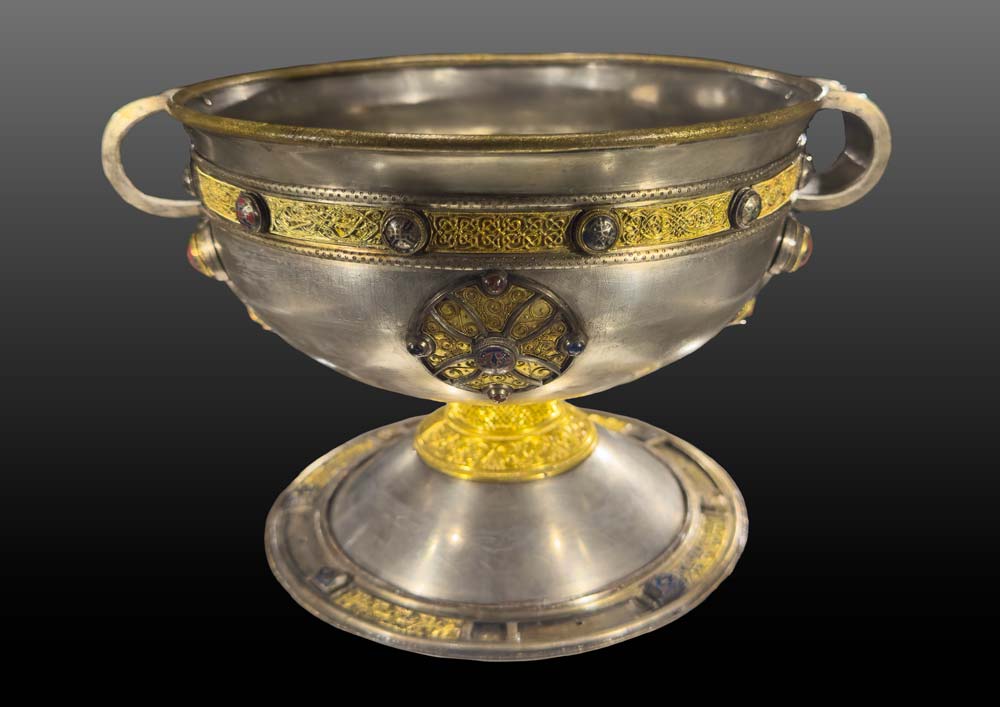
A large stone called Reerasta Cloch had once formed part of the bank, a mute marker of the site’s older, perhaps pre‑Christian significance. In this layered landscape of the rath, and the nearby ruined church and holy well associated with St Molua, religious practice and folk memory overlapped long before any chalice was unearthed.4
During the Great Famine, some families sought priestly blessing for their potato crops. But the potato blight returned, and “some of the Irish turned back to their old pagan gods, planting their crops inside fairy ringforts, in fields of standing stones, or areas associated with ancient gods—a desperate people in desperate times.”5 Thus it was that in 1868 two men had cleverly grown potatoes inside the ringfort at Reerasta, near Ardagh, in order to avoid the effects of the potato blight. With this, the rath became an active agent in the struggle to survive, a place whose special, perhaps dangerous power might yet be harnessed when the civil and ecclesiastical Christian backstops seemed to fail.
The discovery story itself, as it crystalized between Lord Dunraven’s 1869 lecture and a later published account of its discoverer’s own recollections, has become part of the fort’s folklore. In September 1868, fifteen‑year‑old James Quinn was digging out the potatoes that he had planted in the rath when he made the remarkable discovery that would become known as the Ardagh Hoard.
“James recorded how he was digging potatoes in the middle of the rath when his spade ran down into the earth…. When the spade went down, he began to clear away the earth, and came at length to a little enclosure or place made up of round stones, and saw the chalice, and four brooches crosswise over the head of the chalice, the four spikes of the brooches, forming something in the shape of a cross. Inside the chalice was something like a silver cup. He took all the objects up in his hands and brought them into the house to his mother.” 6
Quinn remembered knocking off some glass studs and decorative elements as he lifted the objects, a detail that both humanizes the scene and explains losses visible on the chalice today.7
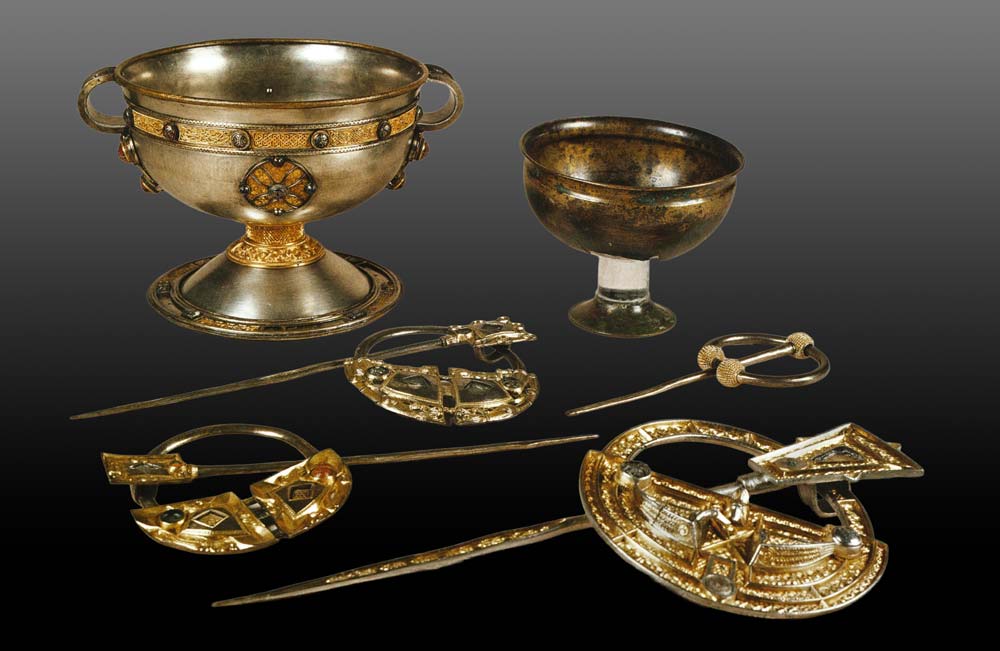
Lord Dunraven’s account, based on what he had been told by the family, differed in some particulars—he believed the brooches were found inside the cup, an impossibility given their size—but he captured the drama of the moment when the spade struck “something hard, like metal” at the base of the bank, three feet down in the side of the rath. The objects passed from the Quinns to the land agent and then to the Catholic bishop of Limerick, George Butler, as trustee for the Sisters of Mercy who owned the land. The Bishop gave a reward of £50—in 2026 this would be £16,130 (€18,552). Of this, £40 went to James Quinn and £10 to his helper Patrick Flanagan.
It was only in 1874, after a protracted dispute over treasure‑trove law, that the artifacts were purchased from the Bishop for £500 by the Royal Irish Academy. The Ardagh Hoard eventually became a core part of the “Treasury” at the National Museum.
James Quinn emigrated to Australia and died in Melbourne in 1934, while Patrick Flanagan died in a workhouse in 1895, unhappy with his small share of the reward. Their fates underline how a national icon emerged from the labour of poor rural tenants whose relationship to the land was precarious even as they unearthed its treasures.
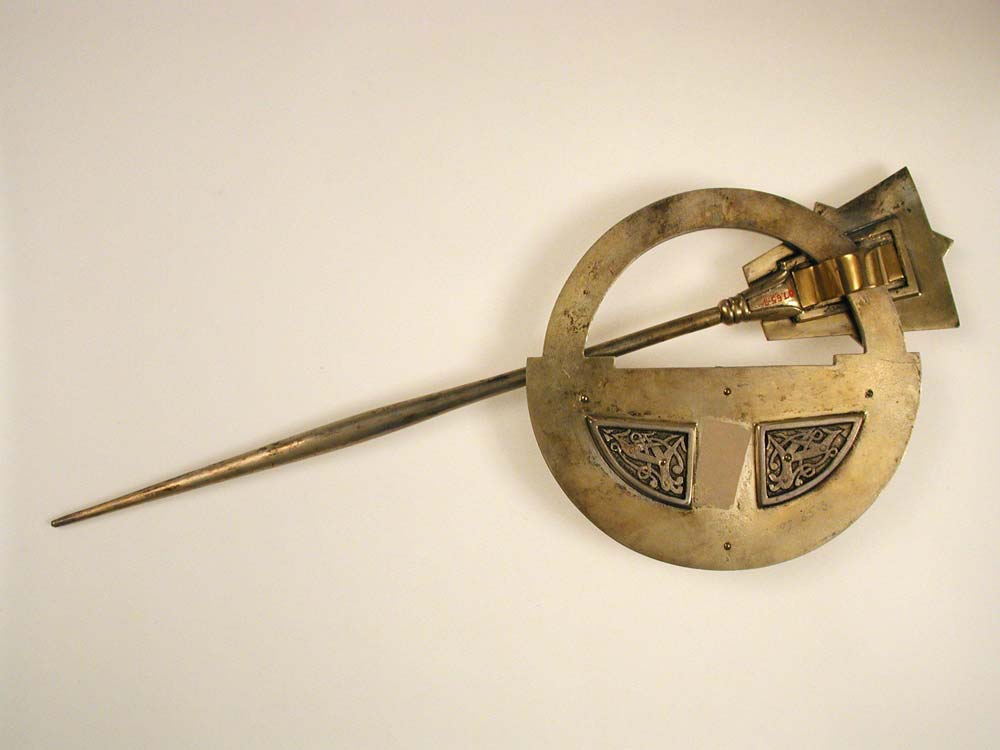
The hoard itself comprises six objects: the great silver chalice—explored in detail above—a smaller plain copper‑alloy cup, and four silver brooches, one large, elaborately decorated penannular brooch and three pseudo‑penannular brooches. The chalice is generally assigned to the 8th century based both upon its style and its inscription. The latest piece in the group, a thistle brooch, belongs to the late 9th or early 10th century.
It was only in 1874, after a protracted dispute over treasure‑trove law, that the artifacts were purchased from the Bishop for £500 by the Royal Irish Academy. The Ardagh Hoard eventually became a core part of the “Treasury” at the National Museum.
James Quinn emigrated to Australia and died in Melbourne in 1934, while Patrick Flanagan died in a workhouse in 1895, unhappy with his small share of the reward. Their fates underline how a national icon emerged from the labour of poor rural tenants whose relationship to the land was precarious even as they unearthed its treasures.
Taken together, these dates suggest burial of the hoard sometime after around 900. Raghnall Ó Floinn has pointed out that the large brooch bears “knife cuts” on the pin head, characteristic of Viking‑age tests for silver quality, and notes that patterns of hoarding precious metal in 9th–10th‑century Ireland often coincide with periods of Viking raiding or dynastic conflict. In this reading, Reerasta Fort functioned as a safe cache beyond an ecclesiastical center—possibly Cashel, Emly, or Scattery Island—where church treasures and high‑status dress ornaments associated with kings or clerics could be concealed until danger passed.8
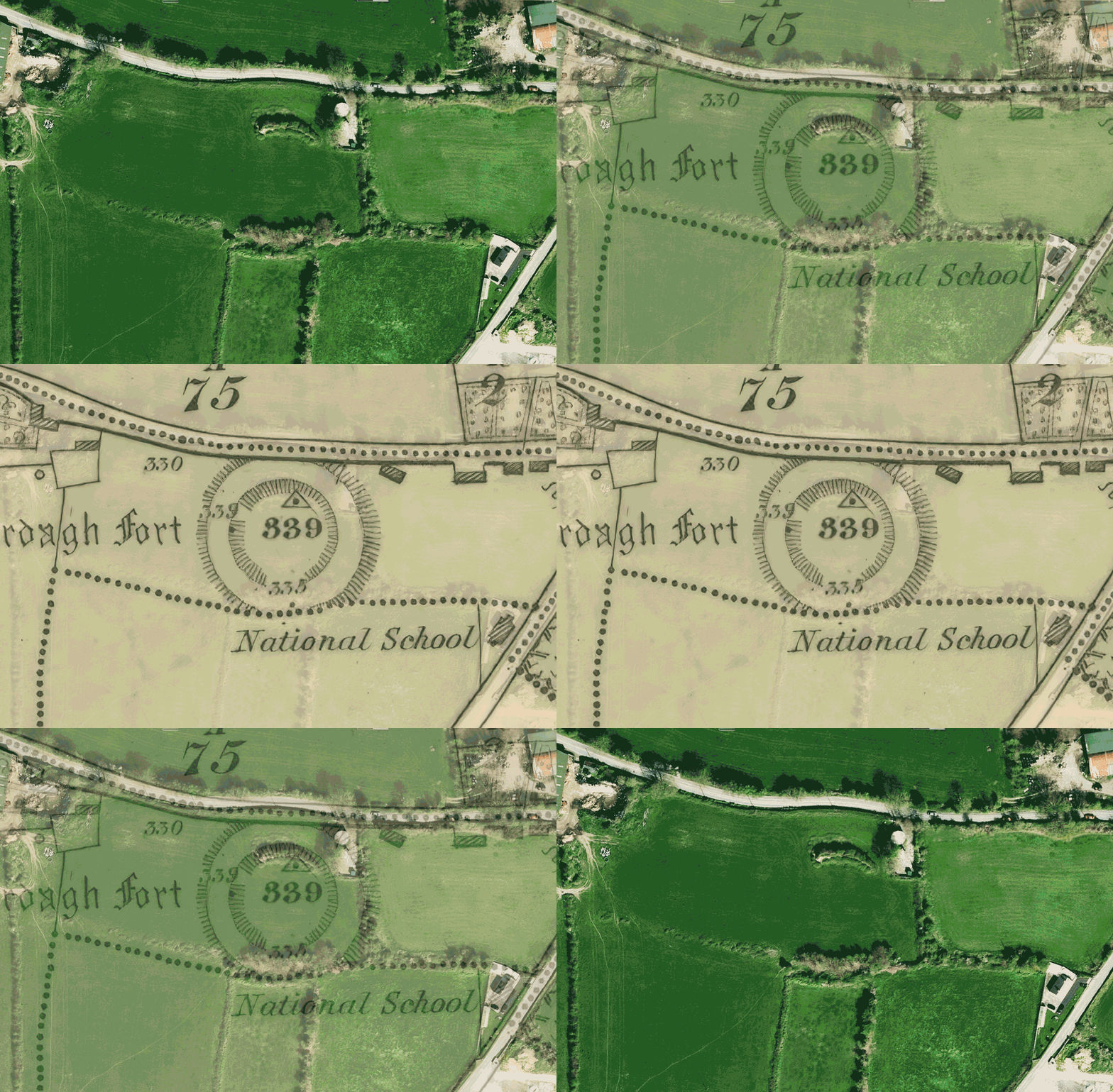
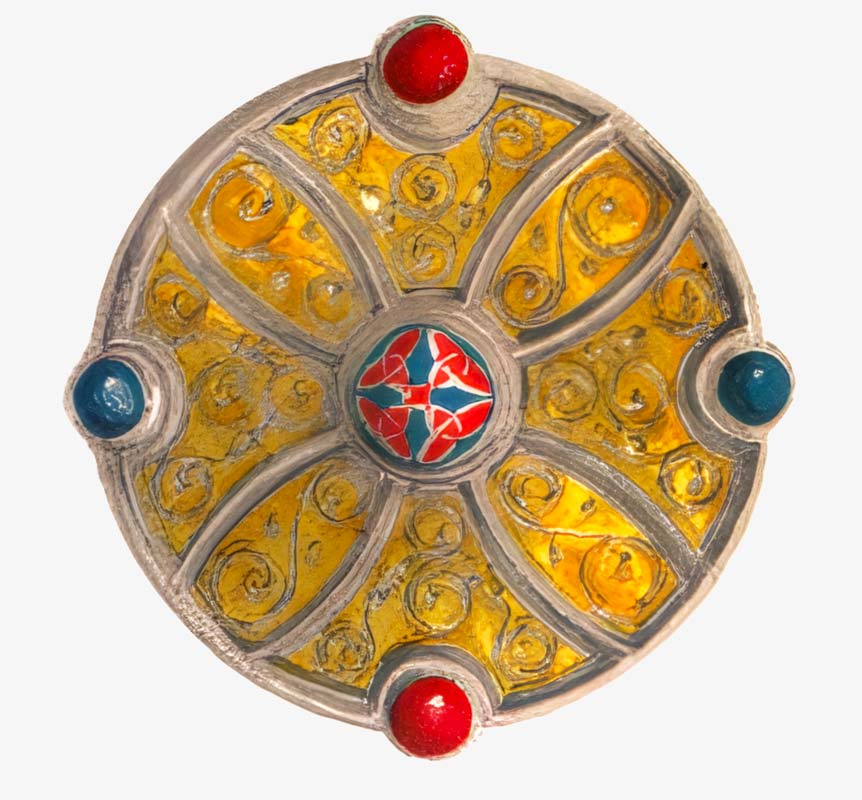
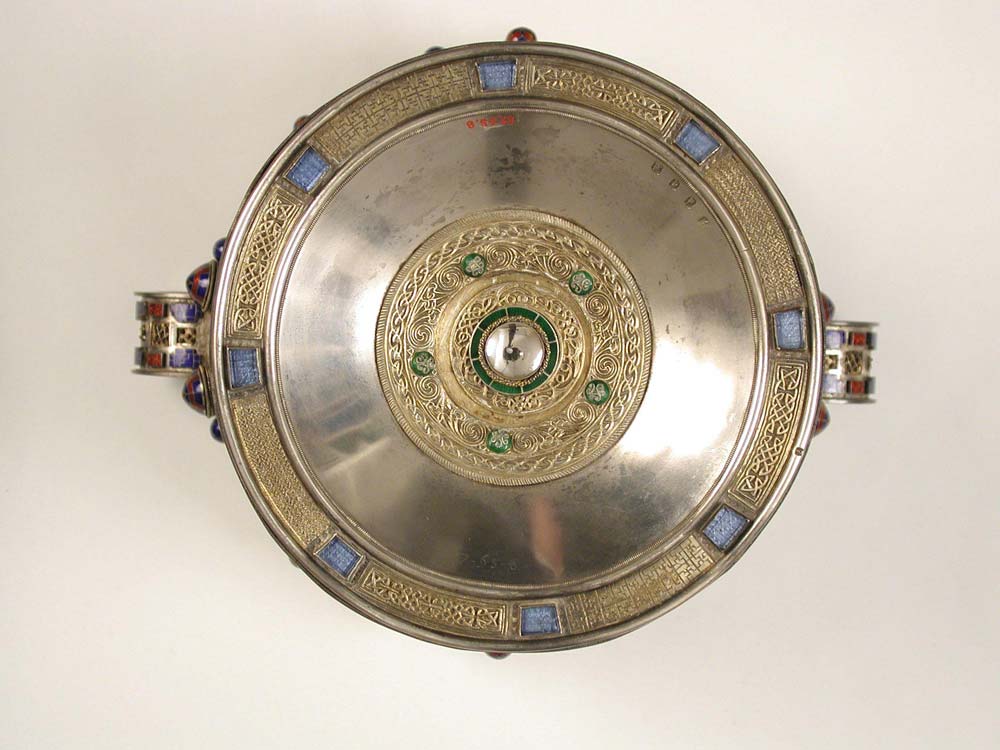
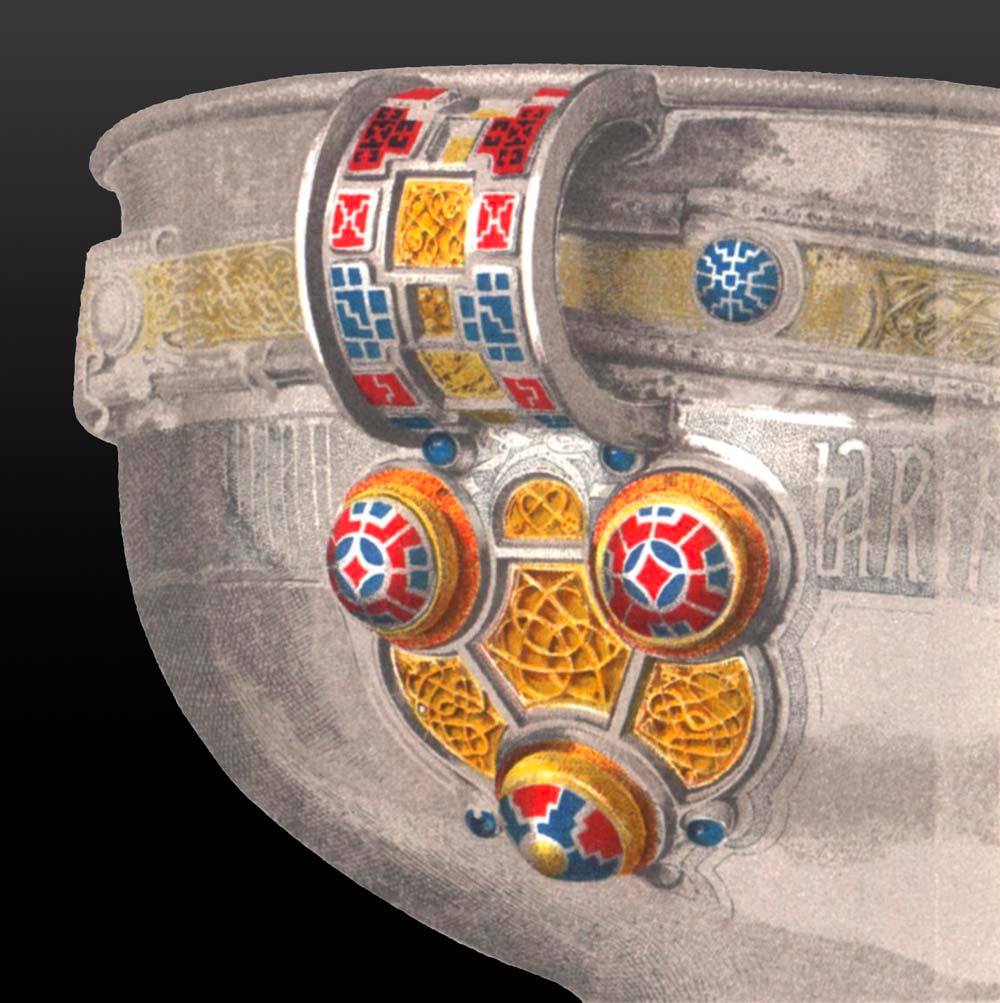
Lord Dunraven’s meticulous technical description brings out the chalice’s status as a singular exemplar of medieval Irish metalworking. The vessel, 18 cm (7 in.) tall and and 23 cm (9 in.) in diameter, is primarily of silver alloyed with copper, its foot and bowl spun and then clad in a complex skin of gold, enamel, glass, amber, and gilt bronze; in all, it consists of 354 separate components. The band that encircles the bowl combines two semi‑cylindrical silver tubes punched with tiny ring-like dots, between which sit twelve gold reverse-hammered plaques overlaid with the finest filigree in interlace and trumpet patterns, alternated with enameled roundels.
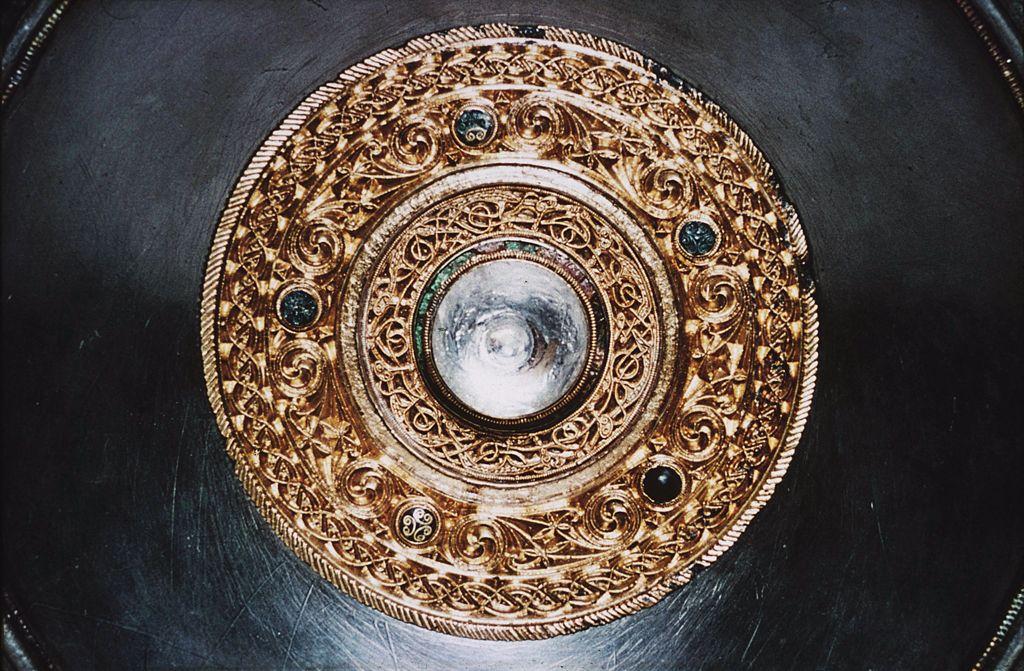
The two handles, structurally functional, are themselves miniature compositions of blue glass, amber, filigree, and paneled enamel, while the circular medallions on the bowl carry gold open‑work interlace around enamel bosses framed in silver. Under the foot, a rock crystal roundel is ringed with amber and gold filigree; beyond, pierced plaques backed with mica, further enamels, and plaited silver wire create a radiant underside—lavish decoration in a part of the vessel rarely seen during use.9
Dunraven and later scholars have shown that the chalice is steeped in the vocabulary of Insular Christian art: rectilinear “Greek key” and step patterns, spirals and divergent trumpet motifs, complex knot‑work, triquetras (a triangular figure composed of three interlaced arcs), and occasional elongated animal forms whose heads and limbs dissolve into interlace. The workmanship stands comparison with the equally iconic Tara Brooch; both exemplify a 9th‑century moment when Irish goldsmiths brought native traditions of spiral and interlace design to a technical and aesthetic peak. At the same time, Griffin Murray has argued that the form of the Ardagh chalice—two‑handled, wide‑bowled, resting on a broad foot—ultimately derives from late Roman canthari and liturgical vessels of the 4th–5th centuries, transmitted through Romano‑British and Continental Christian traditions during the period of Ireland’s conversion. In his view, the hoard as a whole illustrates how an originally Roman repertoire of forms (two‑handled chalices, penannular brooches, strainers and ladles) was adopted, transformed, and then held with remarkable conservatism in Ireland for centuries, long after those types had vanished elsewhere in Europe.10
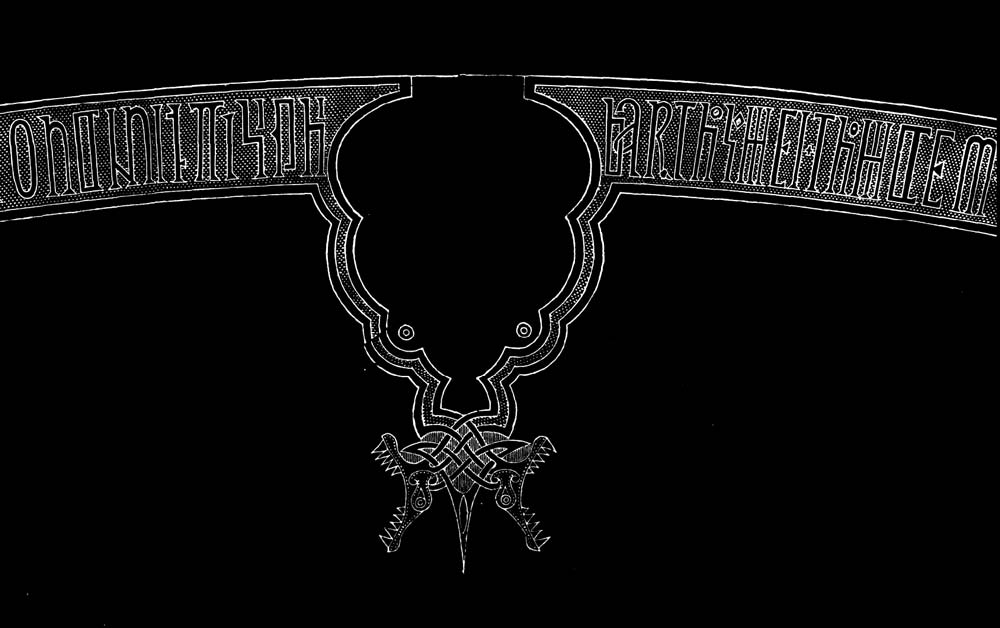
The chalice’s most intimate feature is its inscription: around the bowl runs a list of the twelve Apostles, in beautifully cut Roman uncials picked out by stippling the background. The sequence—PETRI, PAULI, ANDRI, JACOBI, JOHANNIS, PILIPHI, BARTHOLOMEI, THOM, MATHEI, JACOBI, TATHEUS, SIMON—parallels lists in the Canon of the Mass and in early liturgical sources, anchoring the vessel firmly in the world of the Eucharist. For Dunraven, the close resemblance between particular letter forms on the chalice and those in manuscripts like the Book of Kells, the Durham Gospels, and the Gospels of St Chad indicated that the inscription belonged within the broad 7th–9th‑century script tradition. Murray goes further, suggesting that such a chalice may perpetuate in metal the memory of even earlier liturgical equipment introduced in the 5th century: just as early hand‑bells, crosiers, and house‑shaped shrines retain late Roman Christian shapes, the Ardagh chalice may be the refined descendant of an originally Roman type that had long since become “Irish.” 11
“This was found buried…which suggests that it was so precious that, at some point, someone decided it needed to be buried, perhaps, as a dedication or votive of offering, but more likely to protect it. And so we have, in this chalice, an object that both signifies the great history of Irish art, but also its connections to a wider world.” 12
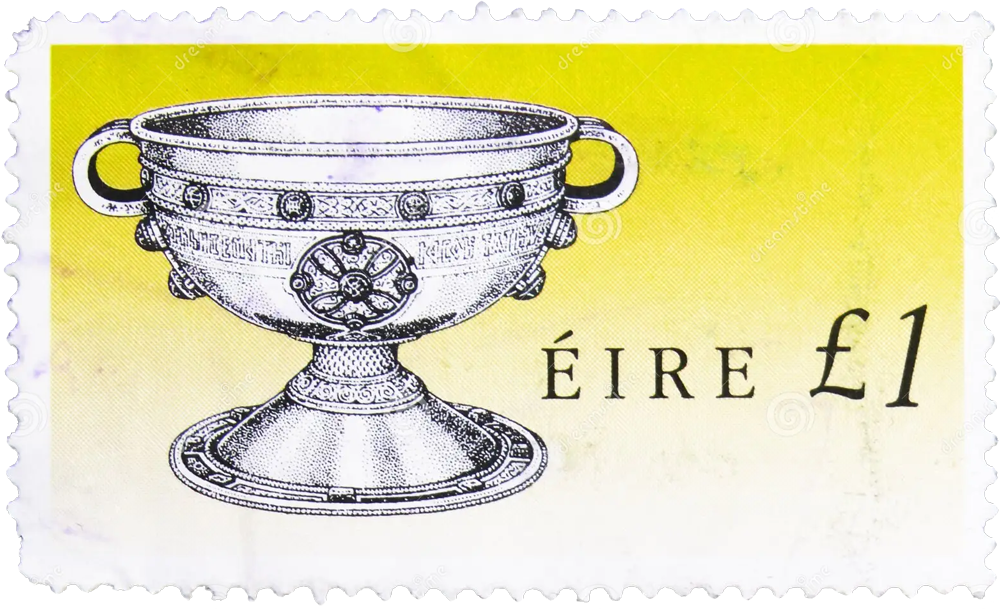
From the moment of its acquisition by the Royal Irish Academy, the Ardagh chalice was held up as proof of a native genius equal to the greatest of Europe. Maeve Sikora notes that its form inspired major symbols of modern Irish identity, notably the Sam Maguire Cup, awarded to winners of the Gaelic Athletic Association’s football championship. Murray points out that the Ardagh hoard as a whole fed directly into the visual language of the late‑19th‑ and early‑20th‑century Celtic Revival; jewelers, designers, and nationalist artists mined its interlace, brooch forms, and chalice profile as emblems of a heroic, sophisticated Gaelic past that could underwrite claims to cultural distinctiveness and political sovereignty. In this sense, Reerasta Fort became not only the hiding place of an early medieval Eucharistic vessel but also the subterranean source of modern Irish national iconography.13
The ringfort itself participates in a longer tradition of belief about raths and “fairy forts” as charged places where the human and other‑than‑human worlds intersect. The 19th‑century traditions collected by Dunraven—of battles, refugees from the Danes, clandestine Masses, and a holy well whose rituals continued even after the parish priest attempted to suppress them—show how Christian practice layered over an older sense of the fort as a liminal sacred site.
In local memory, Reerasta was also a place of hidden wealth: Mary Quinn long believed that “gold in large quantities was secreted somewhere within its precincts,” and told Dunraven a perhaps apocryphal story about an earlier golden chalice dug up near the fort and lost when her children took it out to play. Such tales echo a widespread motif in Irish folklore in which raths and standing stones conceal buried valuables, often protected or claimed by the “good people.”
The Ardagh ringfort is a microcosm of Ireland’s long negotiation between land and belief: As a ringfort, it belongs to the early medieval landscape of enclosed farmsteads and minor royal sites; as a “fairy fort,” it participates in a much wider vernacular cosmology that reads such earthworks as thresholds to an Otherworld and repositories of treasure and danger alike. As the burial place of the Ardagh hoard, it marks a moment of 9th‑ or 10th‑century crisis when churchmen or aristocrats sought to protect liturgical vessels and costly brooches from Vikings or rival kings by committing them to the soil. As the place where one of Ireland’s most celebrated treasures was found, it became in the 19th and 20th centuries a quiet epicenter for assertions of Irish artistic brilliance and national continuity.
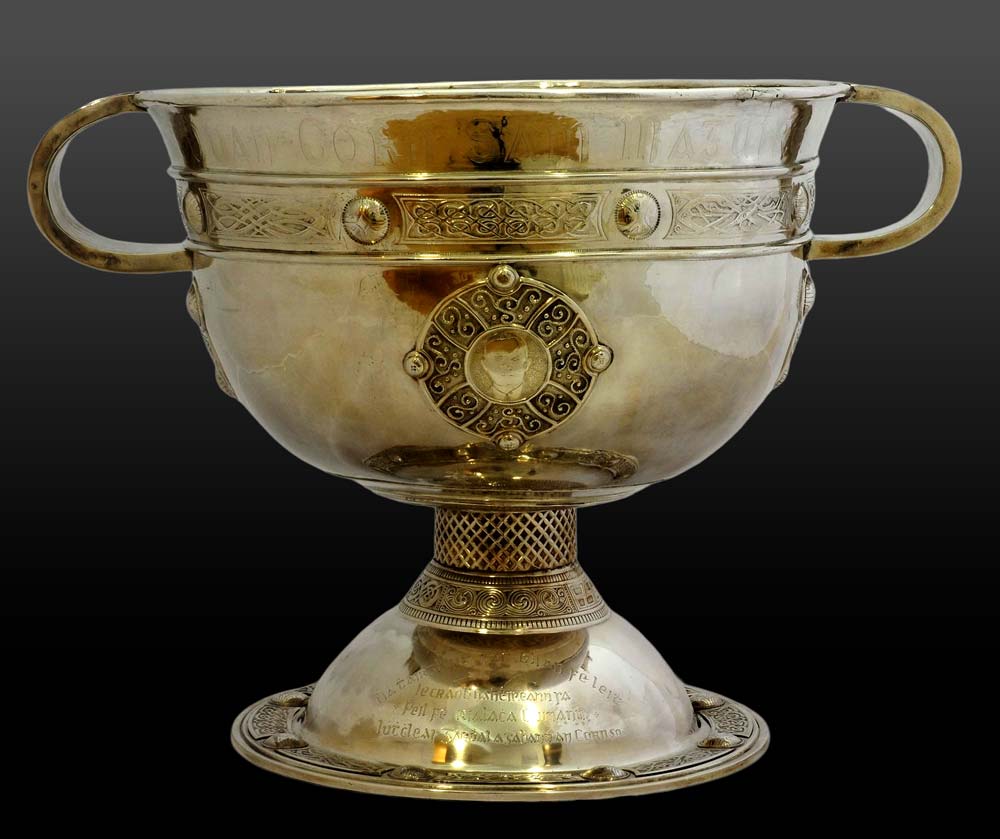
Also modeled after the Chalice is the O’Duffy Cup, presented to the winners of the All-Ireland Senior Camogie Championship. Camogie is a women’s sport similar to the game of hurling.
Click here to see all the notes from this page. Parts of this page were drafted using AI technology; all content has been edited by the author.
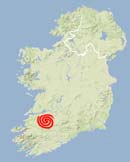
Ardagh, Co. Limerick
Nearest Town: Rathkeale
Latitude: 52° 29′ 37.71″ N
Longitude: 9° 4′ 7.01″ W